Powder Coat Wheels Cost (2026): Per Wheel and Full Set
Powder coating wheels costs $100 to $250 per wheel, or about $350 to $900 for a set of four in 2026. Estimate it, and compare powder coat to a paint refinish.
Estimate your powder coat wheels
Choose Powder coat / full refinish, set the wheel type, and pick how many. Most people do all four, which lands around $350 to $900 as a set.
Estimated repair cost
$75$150
Most people pay around $115
How this is worked out
1 alloy wheel with curb rash.
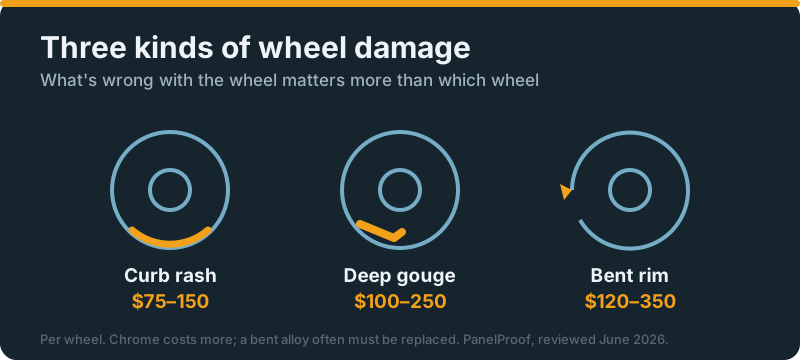
Steel and chrome wheels can usually be bent back; a bent alloy often has to be replaced rather than straightened for safety. Powder coating four wheels typically lands around $350–$900 as a set.
An estimate from typical US shop pricing, not a quote. Get it in writing from a local shop. Your exact cost depends on the vehicle, paint, and labor rates near you.
Costs reviewed July 2026.
Typical cost
$100$250
Costs reviewed July 2026
Powder coating wheels costs about $100 to $250 per wheel, which works out to roughly $350 to $900 for a set of four. Standard-size wheels in a stock color sit at the low end; big 20-inch-plus wheels and specialty finishes like candies and two-tones push a set toward $800 to $1,500.
Unlike a quick paint touch-up, powder coat is applied electrostatically and baked on, so it resists chips, brake dust, and weather for years. That durability, plus the option to change color, is why people choose it over a simple paint refinish.
Per wheel vs the set
Powder coating is almost always done as a set of four, because a freshly coated wheel will not perfectly match three weathered ones. The per-wheel price exists if you only need one, but the value is in doing all four at once: one round of tire removal, one setup, one uniform finish. Use the estimator above with Powder coat / full refinish selected and bump the count to four to see the set range.
What you are paying for
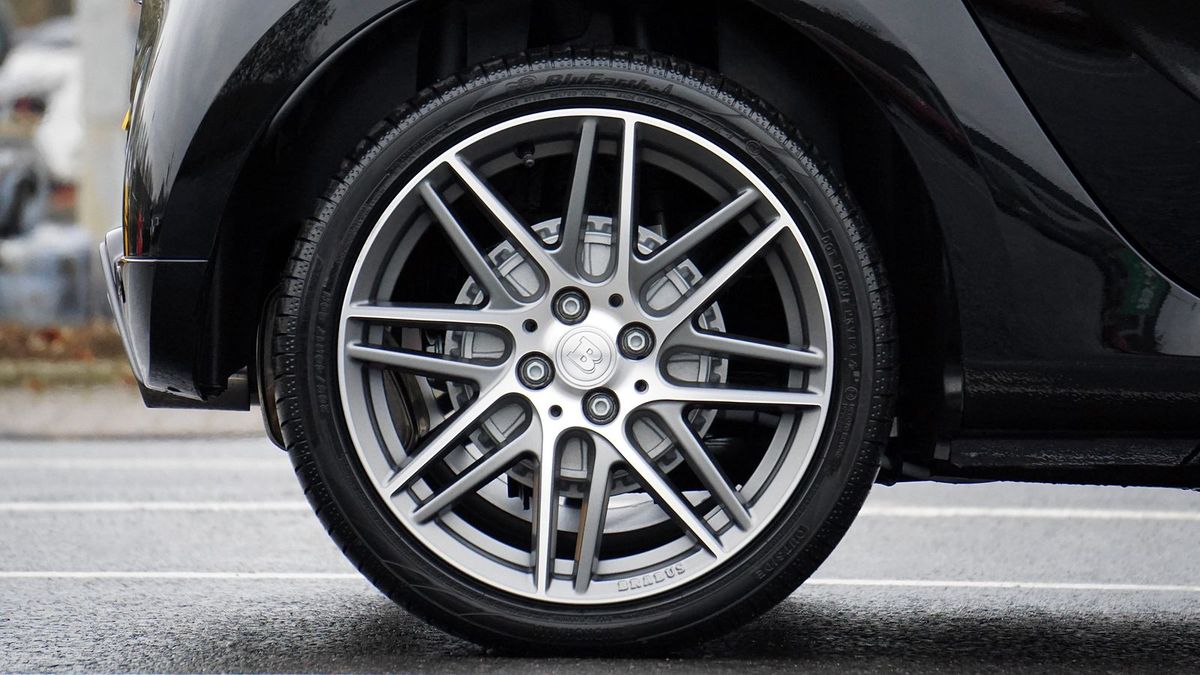
The process is more involved than spraying paint. The shop strips the old finish, blasts the wheel clean, repairs any curb rash or gouges, applies the powder, and bakes it in a curing oven. That means a curbed set gets fixed and refinished in the same job, since the sanding and filling happens before the powder goes on. A deep gouge or a bent wheel is the exception; those need separate structural repair first, before the wheel is ready for coating. Tires come off and go back on, sometimes with fresh TPMS seals. That labor is why even a stock-color set is a few hundred dollars, and why it is not a driveway job.
Why the finish holds up so much longer
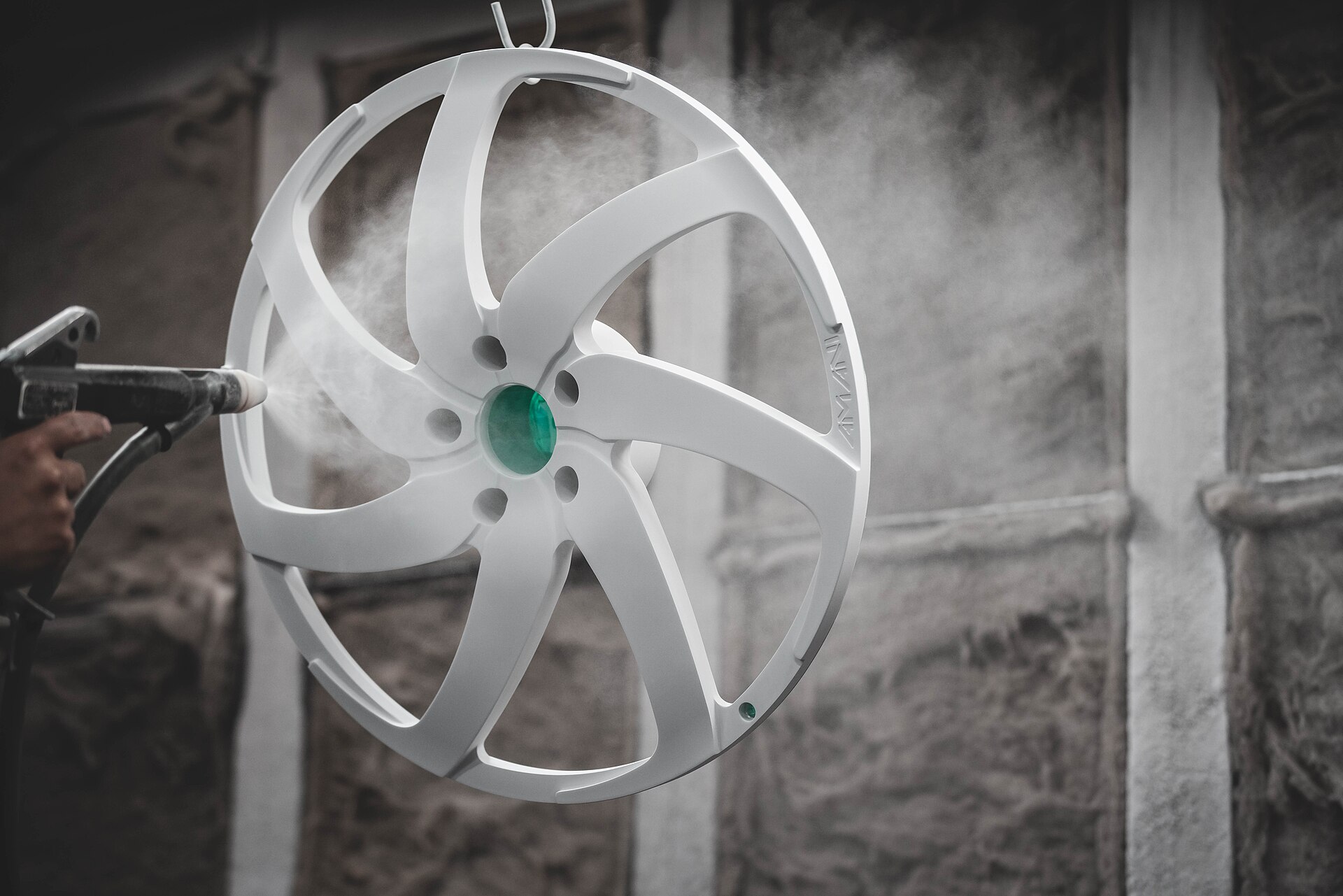
The process is why powder coat beats paint on durability, not just marketing. Liquid paint sticks to a wheel mechanically: the surface gets sanded to give it something to grip, and the paint sets by solvent evaporation. Powder coat bonds differently. The dry powder is electrostatically charged so it clings evenly to every contour of the wheel, then the whole wheel goes into a curing oven at roughly 300 to 400 degrees Fahrenheit, where the heat melts the powder into a continuous film that chemically bonds to the metal at close to a molecular level. That is a fundamentally stronger attachment than paint’s mechanical grip, which is why a quality powder-coat job shrugs off road debris and brake dust in a way a fresh paint job cannot.
The lifespan gap tracks the bonding difference: a well-applied powder coat commonly holds up 15 to 20 years, while a liquid paint refinish on a wheel typically starts chipping and fading within 5 to 7 years, sooner if the car sees winter roads. That is the real case for paying more up front. A powder-coat set outlasts several rounds of touch-up paint over the life of the car.
Specialty finishes cost more because they are not one process but two or three. A candy or chameleon finish starts with a base coat, then a translucent color layer, then a clear top coat, each one cured separately in the oven before the next goes on. A stock single-color job is one powder, one bake.
Spotting a rushed job
A properly cured powder coat looks glass-smooth with even color and no texture. If the cure temperature or time is off, the surface can show orange peel, a bumpy, uneven texture that signals underbaking, or the coating can flake at the edges within months because the electrostatic bond never fully formed before it hit the road. Ask the shop what temperature they cure at and how long the wheel stays in the oven; a shop that can’t answer specifically is more likely rushing wheels through to turn volume. Also ask whether they strip the old finish to bare metal or coat over what’s already there. Coating over an old finish traps whatever imperfections were already underneath and shortens the life of the new coat.
Powder coat or just refinish?
If one wheel has light curb rash, do not powder coat the set. A single-wheel paint refinish is cheaper and faster. Powder coat earns its price when you want a finish that lasts, a color change, or you are refreshing a whole curbed set at once, which is common before a sale or after a season of potholes. For a durable finish on wheels you plan to keep, it is the better long-term value.
A DIY sanded-and-painted refinish runs closer to $50 to $150 a wheel in materials, a fraction of shop powder coating, but expect it to show wear within 2 to 4 years of regular driving, sooner on a car that sees winter salt or gravel roads, against the 15-plus years a properly baked powder coat holds up. That gap is the real tradeoff between the two, not just sticker price.
Run the set through the estimator before you call around, so a standard four-wheel job in a stock color does not get quoted like a specialty finish.
What changes the price
| What changes the price | Effect on cost |
|---|---|
| Number of wheels | Almost always done as a set of four for a uniform finish; per-wheel pricing applies if you do fewer. |
| Wheel size and finish | 20-inch and larger wheels, plus specialty colors, candies, and two-tones, cost more than standard sizes in a stock color. |
| Prep and stripping | Old finish and curb damage have to be stripped and repaired first, which adds labor. |
| Tire removal | Tires must come off and go back on, sometimes with new TPMS seals, which adds to the total. |
| Color change | Switching color is the main reason people choose powder coat over a touch-up refinish; it does not cost extra beyond the color tier. |
DIY or hire a pro?
Do it yourself
Not recommended for this one. Here's why.
Powder coating needs a stripped, blasted wheel, electrostatic application, and a curing oven, so it is a shop process, not a driveway one. The DIY alternative is a sanded-and-painted refinish, which is cheaper but far less durable than baked powder coat.
Hire a pro
$100–$250
A shop strips, repairs, coats, and bakes each wheel for $100 to $250, or about $350 to $900 for a set of four. Larger wheels and specialty finishes push toward the high end.
Is it worth fixing?
Fix it if…
you want a durable, chip-resistant finish, a color change, or you are refreshing curb-rashed wheels across the whole car. Powder coat lasts far longer than paint.
Live with it if…
only one wheel has light curb rash. A single-wheel paint refinish is cheaper and faster than powder coating the set.