Paintless Dent Repair Cost (2026): Real Prices by Dent Size
What paintless dent repair actually costs in 2026, from $75 for a dime-size ding to $650 for a palm-size dent. Estimate yours by size, panel, and paint condition.
Estimate your paintless dent repair
Match the dent to a coin, count how many, pick the panel, and say whether the paint is broken. That is exactly how a PDR tech prices it.
Estimated repair cost
$100$220
Most people pay around $160
How this is worked out
1 quarter-size dent on a door panel, paint intact so paintless dent repair applies.
PDR keeps the factory paint and runs 40–60% less than conventional bodywork. If the paint is broken, the panel needs filling and repaint, which is the higher number.
An estimate from typical US shop pricing, not a quote. Get it in writing from a local shop. Your exact cost depends on the vehicle, paint, and labor rates near you.
Costs reviewed July 2026.
Typical cost
$75$650
Costs reviewed July 2026
Paintless dent repair runs about $75 to $650 for a single dent, and most people fixing a normal door ding land near $200. The number moves almost entirely on one thing: how big the dent is. A dime-size ding is cheap. A palm-size dent on a roof is not.
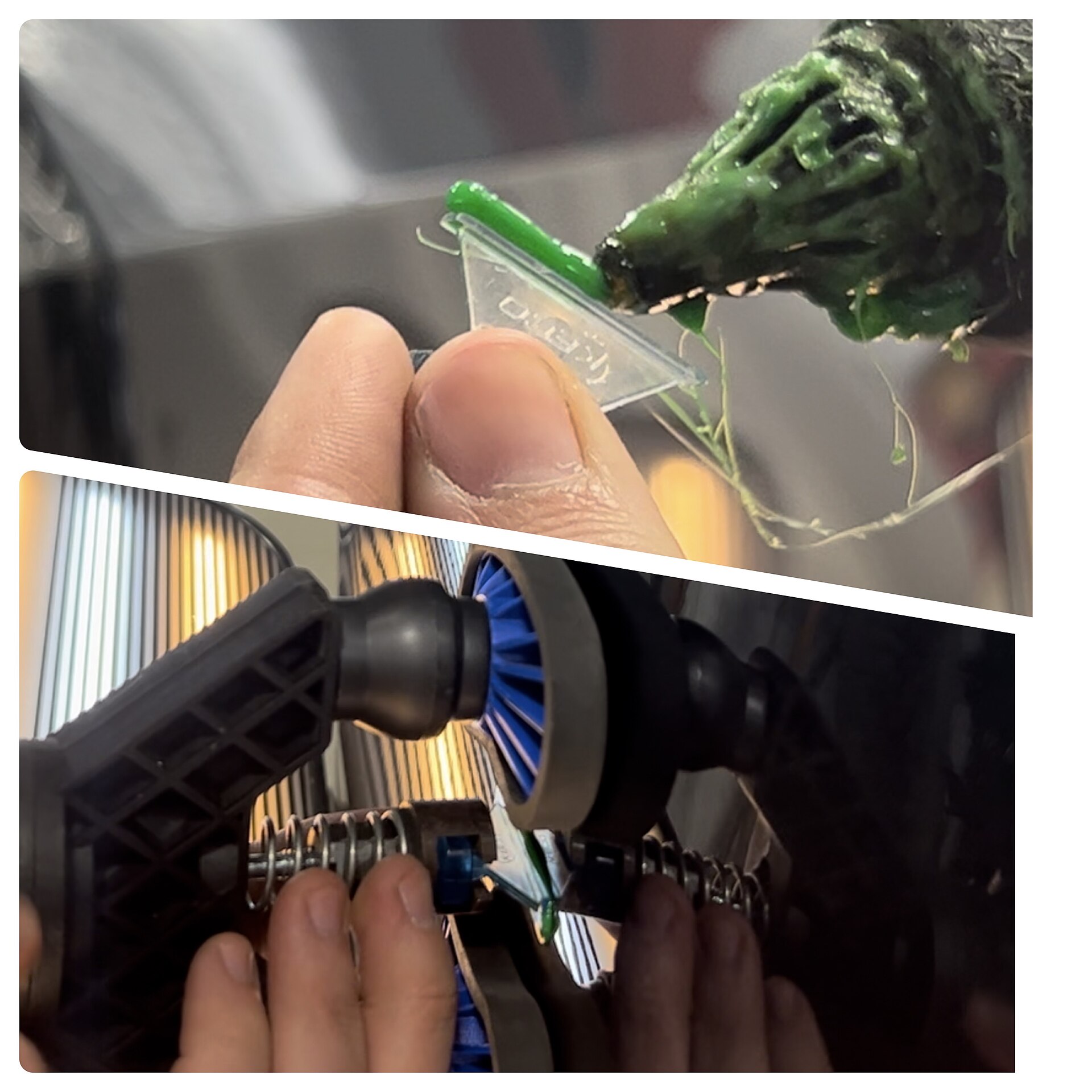
PDR works by massaging the metal back into shape from behind the panel, so the factory paint never gets touched. That is the whole reason it is so much cheaper than a body shop: no filler, no primer, no repaint, no color matching. Typically it runs 40 to 60 percent less than conventional bodywork on the same dent. It is the default fix for dings, hail, and most parking-lot dents as long as the paint is still intact.
What you actually pay
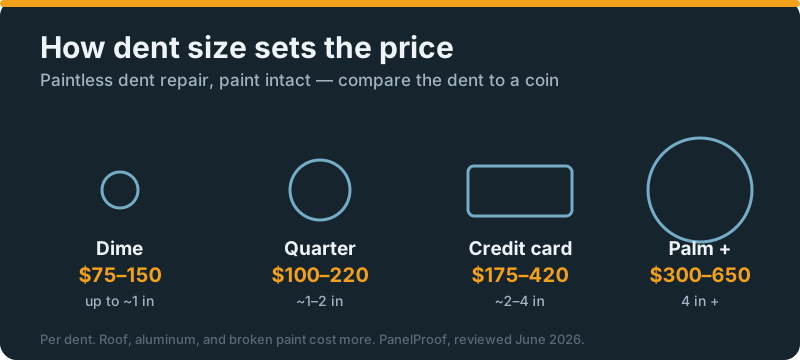
For one shallow dent with good access, here is the honest spread:
- Dime to quarter (a typical door ding): $75 to $220
- Credit-card size: $175 to $420
- Palm size or bigger: $300 to $650, more if it is on a roof or aluminum
Two or three dents on the same visit usually come with a discount per dent, so a few small dings might be a flat $150 to $300 rather than the sum of each. Hail, which is dozens of small dents at once, gets priced as its own job. If that is what you are dealing with, the hail damage repair cost guide breaks it down by panel.
The one question that changes everything: is the paint broken?
Run a fingernail across the dent. If the paint is smooth and unbroken, PDR is on the table and you are in the numbers above. If you feel a crack, a chip, or bare metal, PDR cannot fix it. The panel now needs filling, sanding, primer, and a repaint that blends into the surrounding panels, and that is conventional bodywork.
Paint condition isn’t the only limit, either. A sharp crease on a body line, or a spot with no access to the back of the panel, can rule out PDR even with the paint fully intact, because there’s no way to push the metal back into shape from behind. Those go to conventional bodywork too. And even on a dent PDR can handle, “no trace” is the goal, not always the guarantee: done well, it keeps the original paint and leaves nothing to see, but a very sharp crease or badly stretched metal can leave a faint shadow even after a skilled repair. A good tech will tell you that upfront rather than promise perfection.
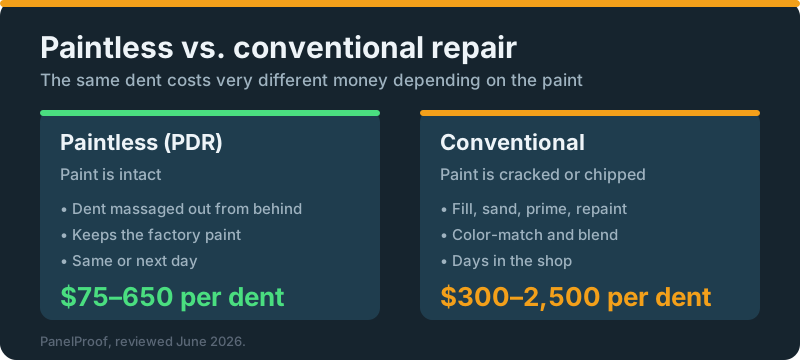
That single difference can multiply the bill by five or more, which is why every estimate starts there. The car dent repair cost guide covers the conventional side, including bumpers and door dings that need paint.
Why some dents can’t go paintless, even with intact paint
Paint condition is the first filter, but it isn’t the only one. Techs also read a dent’s geometry: how wide it is against how deep it is, what the industry calls the depth-to-diameter ratio. A wide, shallow dent, three inches across but only a tenth of an inch deep, is gentle stretching spread over a large area and responds well to massage from behind. A tight, deep dent, half an inch across but three-tenths of an inch deep, is what techs call a “pit,” where the metal at the center stretched so severely on impact that pushing it back up has nowhere for the excess material to go. Force that kind of dent flat and you risk “oil canning,” where the panel loses its structural tension and the metal pops loosely between concave and convex under light pressure, a worse outcome than the original dent. As a rough ceiling, dents larger than six to eight inches across generally fall outside what PDR alone can handle cleanly, whatever the depth.
Panel material changes the math too. Steel has memory: pushed out of shape, it wants to spring most of the way back on its own, which is the whole reason PDR works. Aluminum doesn’t have that memory, so a tech has to push slightly past flush to land on a level result, and aluminum work-hardens as it’s manipulated, meaning it gets stiffer and more prone to cracking the more it’s worked. That’s the real mechanism behind the 20 to 25 percent aluminum surcharge in the factors above: it isn’t just a harder metal, it behaves differently under the exact technique PDR depends on.
Get a repair within these limits and PDR is also a permanent fix in a way a cheap repaint sometimes isn’t. There’s no filler to shrink, crack, or pop loose years later, because nothing was added to the panel. The original metal and the factory paint are all that’s there, which is also why a good PDR repair is invisible for as long as the car keeps its paint.
Should you try a DIY kit?
A glue-pull kit, the kind with tabs, a glue gun, and a lifter, genuinely works on a shallow, rounded dent with intact paint, the classic shopping-cart ding. Expect to spend $25 to $120 on the kit and an afternoon learning the feel. Where DIY goes wrong is sharp creases, dents on a body line, and stretched metal, because pulling too hard creates a high spot that is harder to fix than the original dent. If the dent has a crease or sits on an edge, pay a tech.
When it is worth fixing
A dent on a door edge or a body line is worth fixing, both because it catches the eye and because a lease return or resale will ding you for it. A faint dish in the middle of a panel on an older car you plan to keep? That is a fair one to live with. A dent does not spread on its own as long as the paint is sealed.
Whatever the quote, run your dent through the estimator above first. Walking into a shop already knowing a quarter-size door ding should be about $150 to $220 is the difference between a fair price and an upsell.
What changes the price
| What changes the price | Effect on cost |
|---|---|
| Dent size | The biggest lever. A dime-size ding is $75–150; a palm-size dent is $300–650+. |
| Number of dents | Each extra dent adds cost, but shops discount the second and third on the same visit. |
| Panel and access | Roofs, pillars, and braced areas are harder to reach, so they cost 20–25% more than a door. |
| Aluminum vs steel | Aluminum panels hold dents differently and take longer, adding about 20–25%. |
| Paint condition | If the paint is cracked or chipped, PDR is off the table and it becomes conventional bodywork. |
DIY or hire a pro?
Do it yourself
$25–$120
A shallow, smooth dent with intact paint and access from behind can come out with a glue-pull kit. Sharp creases, body lines, and tight panels are where DIY kits leave a mess and a pro earns the money.
What you'd buy on Amazon:
Hire a pro
$75–$650
A mobile PDR tech or dent shop handles most door dings and hail in a day, keeping the factory paint. This is the right call for creases, multiple dents, and anything near a body line.
As an Amazon Associate, PanelProof earns from qualifying purchases.
Is it worth fixing?
Fix it if…
the dent sits on a door edge or body line, you plan to sell or return a lease, or it bugs you every time you walk up to the car. PDR is cheap insurance against a worse repaint later.
Live with it if…
it is a faint dish in the middle of a panel you barely notice, the paint is intact, and the car is older. A small dent does not get worse on its own.