Hail Damage Repair Cost (2026): What a Dented Car Really Runs
Hail damage repair costs $150 to $1,500 per panel in 2026. Estimate your car by severity and panel count, and see whether it beats your insurance deductible.
Estimate your hail damage repair
Pick the severity, count the panels with damage, and flag aluminum. Hail is priced per panel, so panel count is what drives the total.
Estimated repair cost
$1,050$2,400
Most people pay around $1,725
How this is worked out
Moderate damage across 3 panels, repaired with PDR.
Most hail repair is PDR, so the factory paint stays. A typical comprehensive deductible is $500–$1,000. If the estimate is well above it and the car is insured, a claim usually beats paying out of pocket.
An estimate from typical US shop pricing, not a quote. Get it in writing from a local shop. Your exact cost depends on the vehicle, paint, and labor rates near you.
Costs reviewed July 2026.
Typical cost
$250$8,000
Costs reviewed July 2026
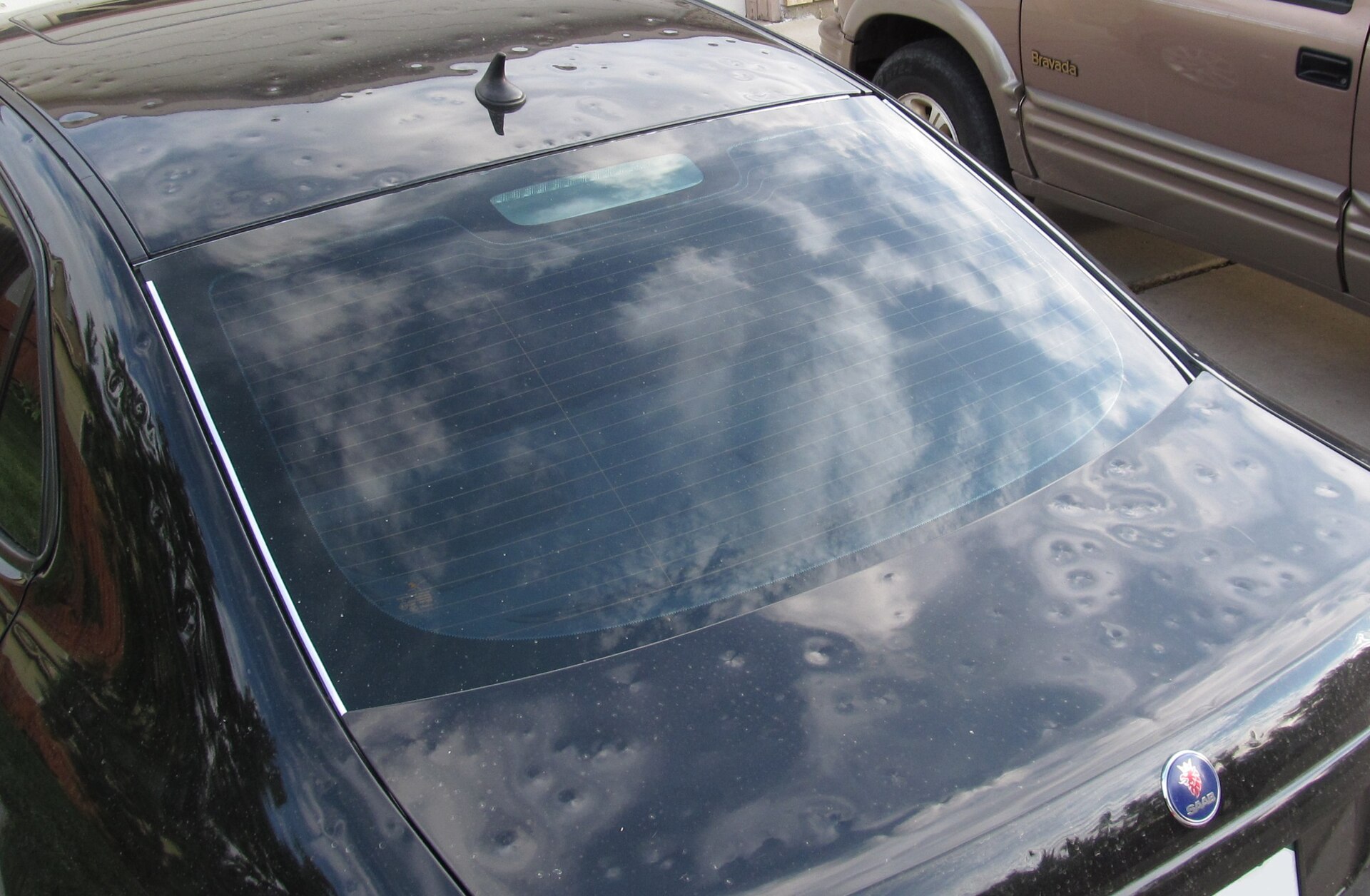
Hail damage repair is priced per panel, which is the key to understanding any quote you get. Light damage runs about $150 to $400 a panel, moderate $350 to $800, and severe $700 to $1,500. So a single dinged hood might be a few hundred dollars, while a car that took it across the hood, roof, trunk, and every door commonly lands at $2,000 to $4,000, and a severe storm on a newer car can pass $8,000.
The good news: most hail is fixed with paintless dent repair, so the factory paint stays and you save 40 to 60 percent versus a full repaint. The other good news is that hail is a comprehensive insurance claim, which usually does not raise your rate the way a collision does.
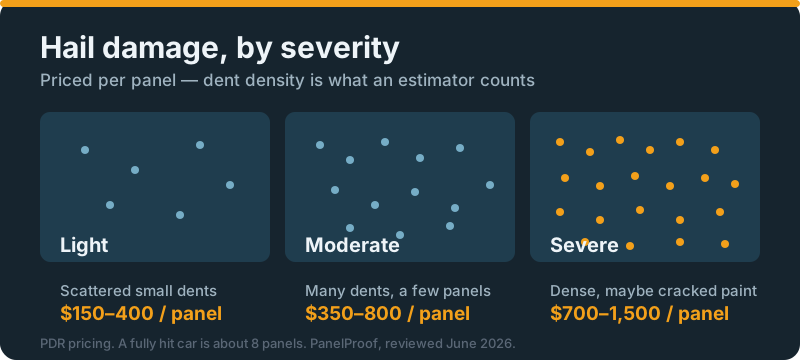
Count the panels, then the dents
Walk around the car in good light and count which panels are dented: hood, roof, trunk, and each door and fender all price separately. A fully hit car is around eight panels. Then judge the density on the worst panel, since that sets the severity tier. Use the estimator above to multiply the two together. The result is the realistic shop range, and it is usually within striking distance of what a hail-repair shop will quote.

The deductible math
This is the decision that actually matters with hail. A typical comprehensive deductible is $500 to $1,000. Because hail is a comprehensive claim and rarely affects your premium, the rule of thumb is simple:
- Estimate well above your deductible: file the claim. You pay the deductible, the insurer covers the rest.
- Estimate near or below your deductible: pay cash, or live with it.
A $2,500 repair against a $500 deductible is an easy claim. A $400 repair is not worth the paperwork. That is the whole calculation, and it is about cosmetic cost versus deductible, not about navigating a collision claim.
When PDR is not enough
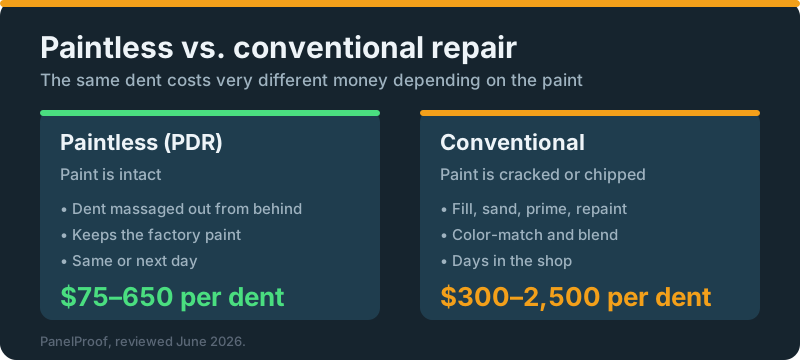
Paintless dent repair handles the vast majority of hail. The exceptions are cracked paint, sharp creases from large stones, and broken glass or trim. Those add conventional bodywork or parts on top of the PDR, which is why severe storms on newer cars climb fast. If your damage is a single cracked-paint dent rather than a stormful, the car dent repair cost and paintless dent repair cost guides are the better fit.
Size and location predict which way a given dent goes before a tech ever touches the panel. A dent close to quarter-size or smaller with no visible paint damage is the classic PDR case; go much bigger and the metal is more likely to have stretched enough during impact to disturb the paint, even where it still looks intact. Dents on a body line, a panel edge, or a reinforced section near a pillar behave differently than the same size dent in the flat middle of a hood or door, because those stiffer areas crease sharply instead of dishing evenly, and a sharp crease is a paint-cracking crease. Oversized hail, softball-size stones are rare but do happen in the Plains and Texas, can warp a panel out of true, which is body-shop work regardless of paint condition. None of this is an all-or-nothing verdict per panel, either: a tech typically works the clean dents with PDR and flags the paint-broken ones for a small conventional spot repair on the same panel, which is why one hood estimate can carry both PDR and paint line items at once.
Is it worth fixing at all?
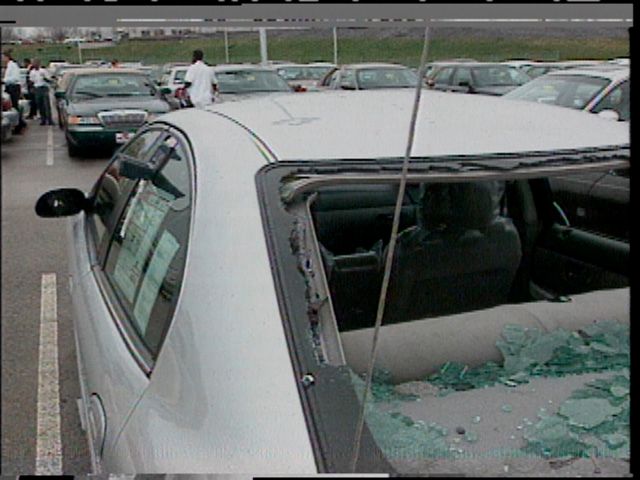
If you plan to keep or sell the car, fix it. Unrepaired hail is obvious to any buyer and drops trade-in value by more than the repair would cost on a decent car. If the car is old, the dents are faint, and you would rather take a cash payout and keep driving, that is a legitimate choice too. Paint-sealed hail dents do not rust, so they are cosmetic, not structural.
Sometimes the choice gets made for you. If the repair estimate comes in above the car’s actual cash value, the insurer will total it instead of fixing it and cut you a check for the car’s value rather than the repair bill. That outcome is most likely on an older, lower-value car hit hard enough to need real bodywork, not straightforward PDR.
How close to that line you actually are depends on which state you’re in, since insurers don’t all use the same math. Most states set a total loss threshold somewhere around 70 to 75 percent of the car’s actual cash value: cross that percentage in repair cost and the insurer totals the car rather than fixing it. A few states set the bar lower, Oklahoma is the outlier at 60 percent, while several others, including Alaska, Arizona, Colorado, and Texas, skip a fixed percentage entirely and only total a car once repair cost exceeds its full cash value. States like California and Georgia use a different method again, the total loss formula, which adds repair cost to the car’s projected salvage value and compares that sum to actual cash value rather than comparing repair cost alone. None of this changes the deductible math above for a routine hail claim, but it matters for an older car with a severe, storm-length hit, where the estimate and the car’s value can end up genuinely close.
Watch for storm-chaser repair crews
Every major hail event draws mobile repair operations that follow the storm from state to state, and it’s a pattern worth recognizing before you sign anything. The tell is speed: a vacant lot or empty storefront that had nothing in it last week suddenly has hail-repair banners and a handful of unmarked vehicles out front, days after the storm passed through. Some of these crews do honest, competent PDR work and move on because that’s simply the nature of chasing hail season across the country. Others take a deposit, do rushed or incomplete work, or are gone entirely once the checks clear, and a warranty from a business that won’t be in the area in sixty days isn’t a warranty. A few also cross a legal line by offering to waive or absorb your deductible, which counts as insurance fraud in most states no matter who proposes it.
The due diligence is the same as any repair, just faster because the crew isn’t sticking around: ask for a permanent address and a phone number with a real local listing, get the estimate in writing, and don’t pay in full before the work is inspected. If you’re filing a comprehensive claim anyway, loop your insurer in before you sign anything with anyone. A legitimate local shop that has done hail work in your area for years is rarely bothered that you asked.
Run your panel count through the estimator before you call anyone. Knowing a moderate, four-panel hit should be roughly $1,500 to $3,000 turns a scary quote into a number you can check.
What changes the price
| What changes the price | Effect on cost |
|---|---|
| Number of panels hit | The main driver. Each panel is priced separately, so a fully pelted car costs far more than one dinged hood. |
| Dent density and size | Light, scattered dents are cheap per panel; dense or large dents push a panel toward the high end or into repaint. |
| Cracked paint or glass | Once paint cracks or glass breaks, PDR alone is not enough and the bill jumps. |
| Aluminum panels | Aluminum hoods and roofs take longer to work, adding about 20–25%. |
| Repair method | PDR keeps the factory paint and saves 40–60% versus conventional repaint of the same panels. |
DIY or hire a pro?
Do it yourself
Not recommended for this one. Here's why.
Hail is dozens of dents across curved panels at once. It is the textbook job for a professional PDR tech with proper lighting and tools. DIY kits cannot keep up across a whole car, and a botched pull on a roof is expensive to undo.
Hire a pro
$250–$8,000
A PDR or hail-repair shop works the dents out panel by panel, keeping the original paint. Light cars are done in a day or two; a fully hit car can take a week.
Is it worth fixing?
Fix it if…
you plan to keep or sell the car, the dents are visible across the hood and roof, or any paint has cracked. Unrepaired hail knocks real money off resale and trade-in value.
Live with it if…
the car is older, the dents are light and only visible in raking light, and you would rather pocket a cash payout. Hail dents do not rust as long as the paint is intact.
Consider a claim if…
you carry comprehensive coverage and the estimate clears your deductible by a comfortable margin. Hail claims rarely affect premiums the way collisions do.
Hail is almost always covered by comprehensive insurance, and a hail claim usually does not raise your rate the way an at-fault collision does. A typical comprehensive deductible is $500 to $1,000. If your estimate is well above the deductible and you carry comprehensive, a claim is usually the cheaper path. This is about the cosmetic repair cost versus your deductible, not legal advice.