Frame Rust Repair Cost (2026): Fix It or Walk Away
Frame rust repair costs $150 to $8,000 or more in 2026. Surface rust is a cheap DIY fix; structural rot needs a welded patch, or it's time to walk away.
Typical cost
$150$8,000
Costs reviewed July 2026
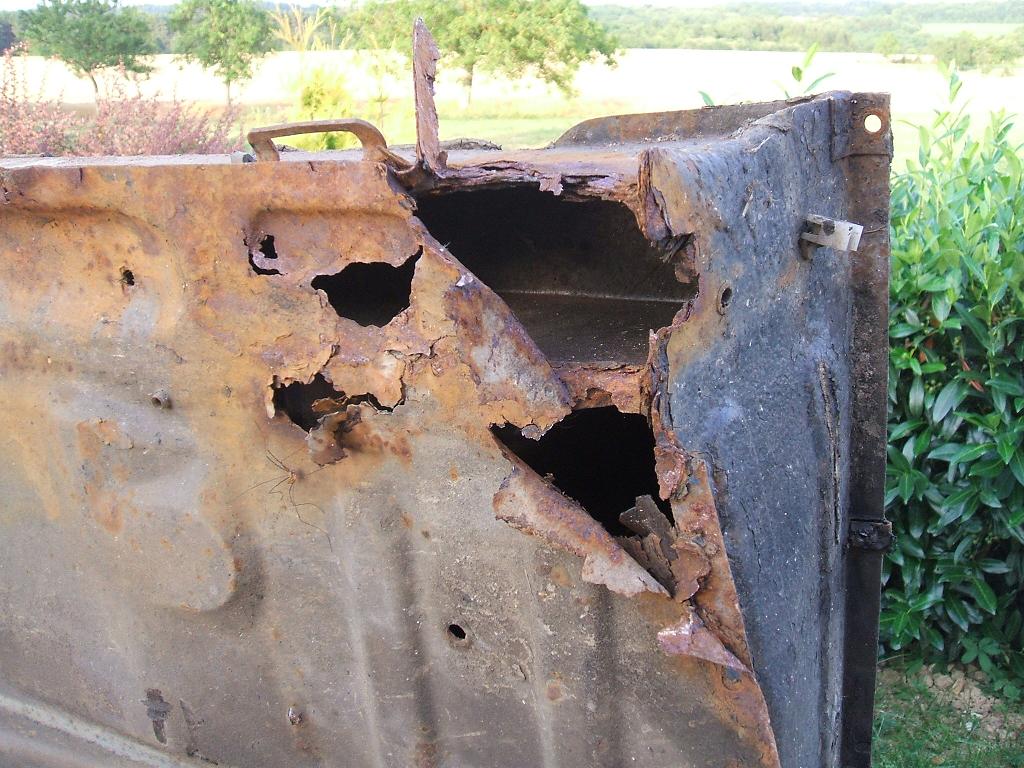
Frame rust repair costs $150 to $8,000 or more, and unlike most damage on this site, the dollar figure isn’t the first question. The first question is whether the rust is still sitting on the surface of the steel or has already eaten into it. Surface staining on a frame rail is a treat-and-seal job for under $150. Perforated, structural rust means cutting out steel and welding in new sections, and past a certain point, it can mean the vehicle itself isn’t worth saving anymore. This is a safety question wearing a cost question’s clothes.
Most people who take an actual rusted-through frame section to a shop for welding pay somewhere around $2,000. Here’s how to tell which end of the range you’re really on, and when the honest answer is to walk away.
The three stages that decide the price
- Surface rust: $40 to $150 DIY, or $500 to $1,500 at a shop. Orange staining on the outside of the rail. No pitting, no soft spots, no holes. Wire wheel it, convert it, seal it, move on.
- Scaling and pitting: $1,500 to $4,000. The metal is flaking and thinning but hasn’t opened up yet. A shop cuts back to solid steel, welds in reinforcement where the pitting is deep, and coats the repaired section.
- Perforation, actual holes through the steel: $2,000 to $8,000-plus. The rust has eaten all the way through in one or more spots. This is cut-and-weld structural work, and price climbs fast with how many sections are affected and how hard they are to reach.
Past the high end of that range sits a fourth, unofficial tier: full frame rail replacement, which starts around $10,000 and can run past $20,000 on a larger truck. Very few vehicles are worth that repair. When a shop quotes you numbers in that territory, they’re usually telling you, politely, to replace the vehicle instead.
Why frame rust isn’t like fender rust
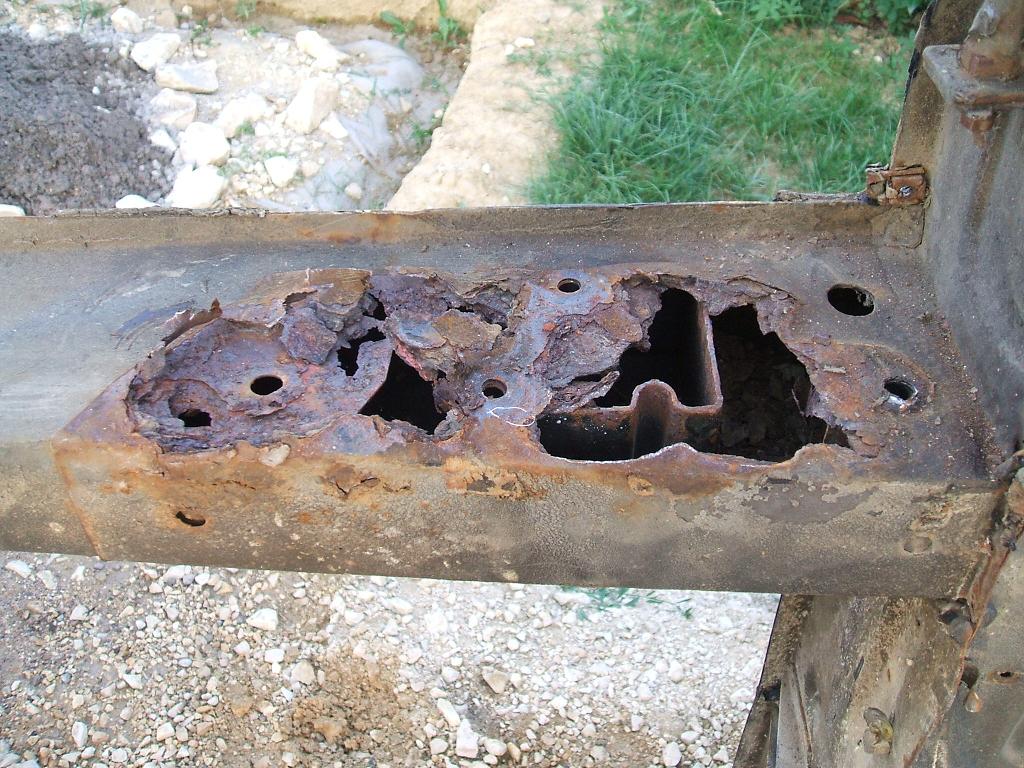
A fender is sheet metal bolted or welded to the outside of the car. A frame is the spine. On a body-on-frame truck or SUV, it’s a separate ladder of boxed steel rails that the whole body bolts to. On a unibody car, there’s no clean separation. The rails are welded into the floor structure itself, so the same steel that’s rusting is also part of the crash structure. Either way, that steel carries the control arms, the engine and transmission mounts, the fuel and brake lines, and the jack points. A rusted door skin is ugly. A rusted frame rail is a “how fast is this getting worse” question, not a paint problem, and it’s the one rust category on this site where getting the diagnosis wrong has real consequences.
Is a car with frame rust safe to drive?
Mostly yes at the surface stage, and it depends a lot after that. Light staining and even moderate scaling rarely change how a vehicle drives day to day, and plenty of older vehicles in salt-belt states carry cosmetic frame rust for years without incident. The calculation changes once rust perforates a rail near a control arm bushing, a leaf spring hanger, or a body mount. Frames rust from the inside out more often than people expect. Road salt and grit collect inside boxed rail sections and corrode the steel from within, so a small bubble on the visible face of a rail can mean a much larger area of thinned or missing metal behind it. That’s the honest reason to have a mechanic put the vehicle on a lift rather than judge it from a flashlight in the driveway.
Will frame rust fail a state inspection?
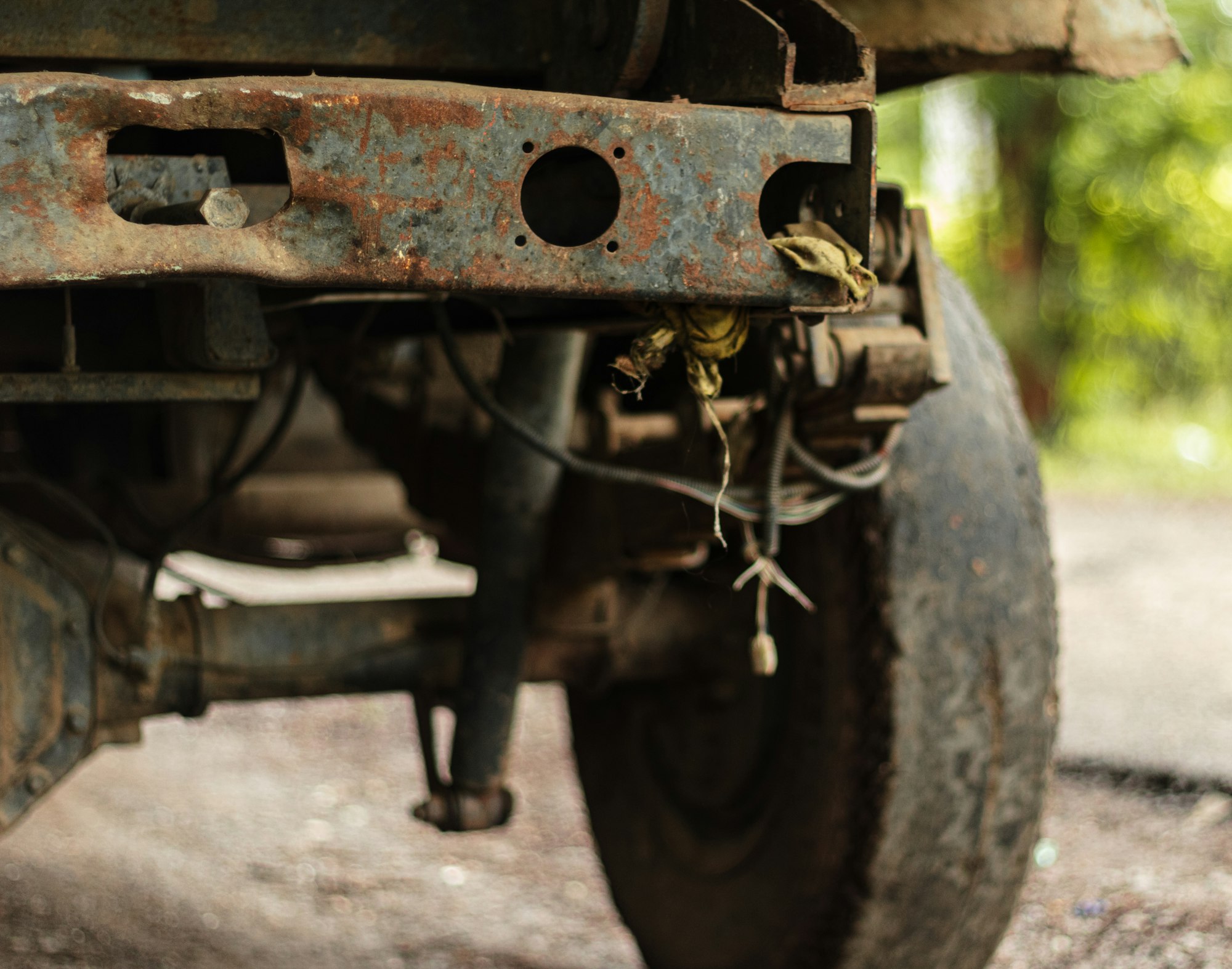
In a lot of states, yes, and the standards are more specific than most drivers assume. Virginia’s motor vehicle inspection code fails a vehicle outright if the frame “possesses rust holes,” is “corroded to the point where it is weakened,” or has any section that’s broken, cracked, sagging, or bent, per 19VAC30-70-120. Pennsylvania doesn’t set a specific rust-hole size but rejects a vehicle if the floor pan is rusted through enough to be a hazard to occupants or let exhaust into the cabin, or if the frame or its mounting components are deteriorated, cracked, or missing. Every state inspection program is different, but the pattern holds: cosmetic exterior rust rarely fails you on its own, while rust that’s actually perforated the frame, the floor pan, or a body mount usually does.
Patch vs full replacement: what actually sets the price
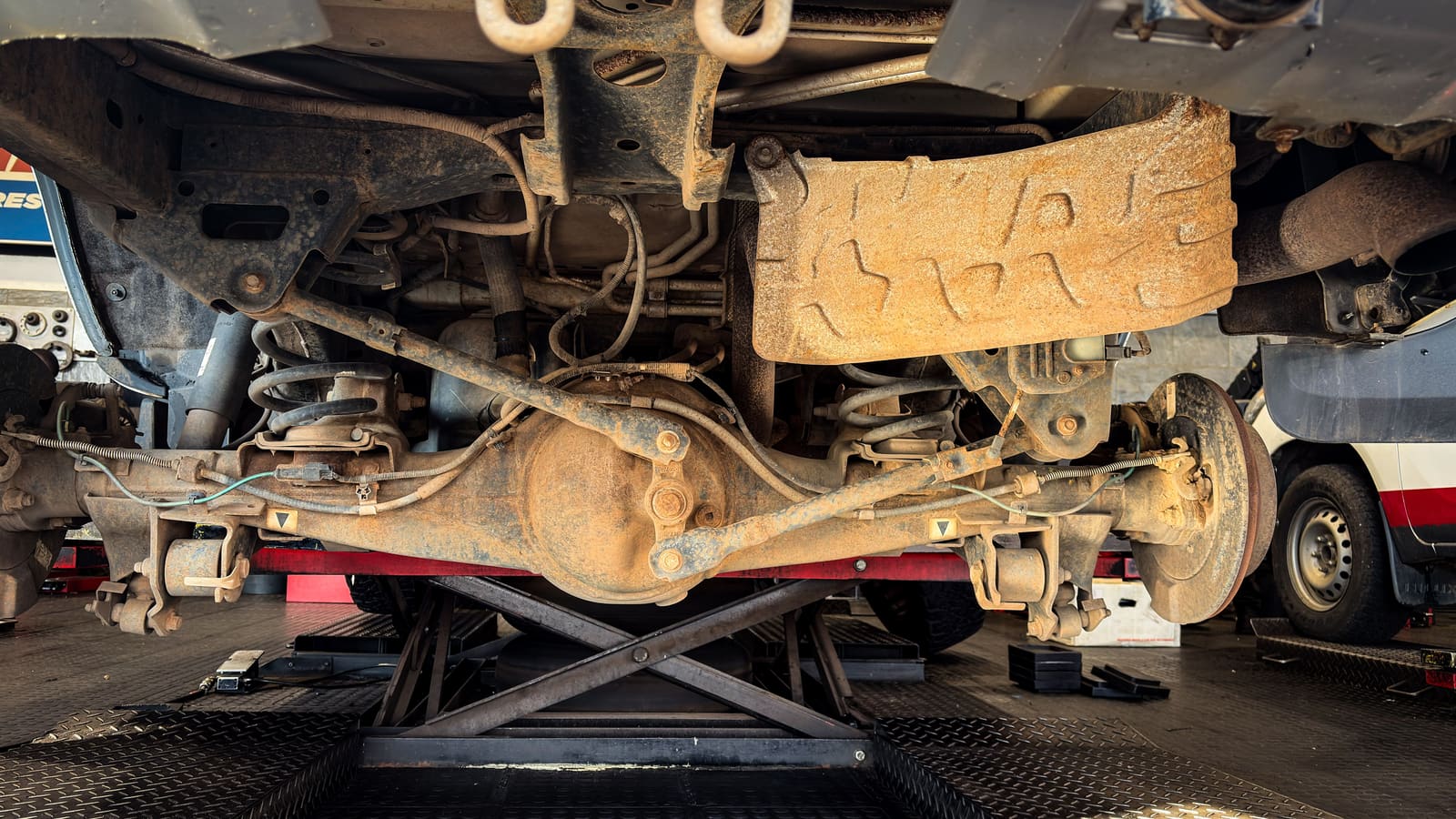
A shop that catches surface rust before it spreads charges $500 to $1,500 to clean, treat, and coat it, and that money is well spent. Once the rust has scaled or lightly perforated a section, cutting it out and welding in a patch runs $1,500 to $5,000, mostly driven by labor hours and how accessible the damaged section is. Rust near a control arm mount or crossmember takes longer than rust on an open span of rail, because the shop has to support the vehicle’s weight differently while that section is out. Once rust has spread across multiple sections or both rails, patch work climbs to $5,000 to $8,000 or more, and that’s usually the number that forces the vehicle-value conversation. Insurance typically doesn’t help here. Standard policies treat rust as gradual wear and maintenance, not a covered peril the way a collision or hail is, so this repair is almost always coming out of pocket.
Can you weld a rusted frame yourself?
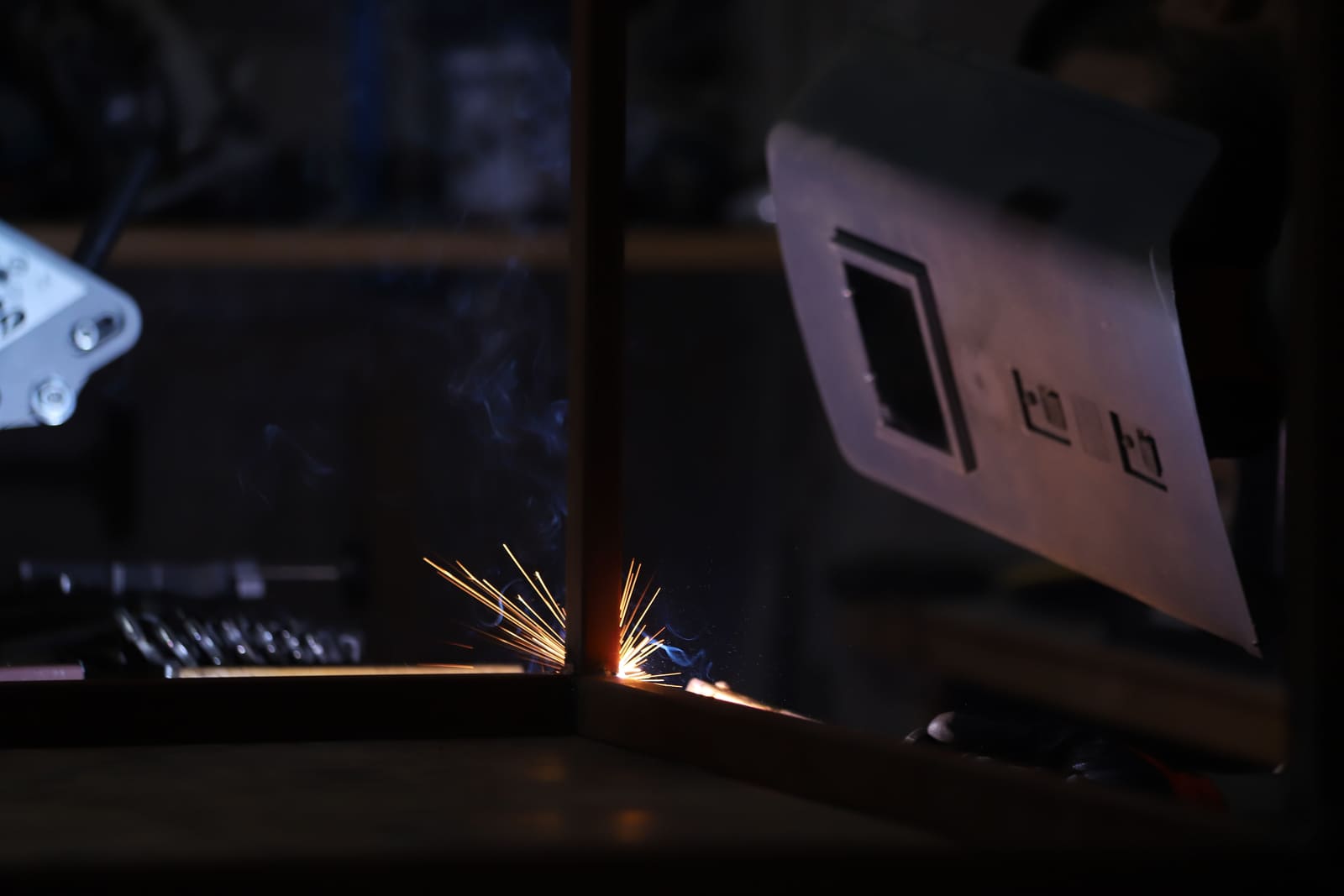
If you already weld and have done structural sheet metal work before, materials for a single patch run $40 to $150 for surface treatment or a few hundred dollars for an actual welded section, steel, converter, and coating included. But be honest about the stakes before you pick up a welder. This isn’t a rocker panel or a fender. A frame rail failure under load can mean a suspension component tearing loose at speed, not just a bad-looking repair. Shops that do this work test-fit the patch, box it correctly so it doesn’t trap moisture again, and know which sections carry real load versus which don’t. A first attempt with no structural welding experience is where this repair genuinely differs from every other rust job on this site: get it wrong on a rocker panel and you’ve wasted a Saturday. Get it wrong on a frame and the failure mode is a control arm mount tearing loose.
When to walk away
If the rust is cosmetic and contained, fix it. A treated and sealed section protects resale and stops the problem from spreading, the same logic that makes catching a scratch or chip early worth it before it becomes rust in the first place. If a shop tells you the rust has spread to both frame rails, several crossmembers, or the section around the fuel tank or gas tank crossmember, get a second number before you commit. Owners working through exactly this decision on truck forums describe the same pattern again and again: a frame that “looks like Swiss cheese” from years of road salt working from the inside out, where surface treatment can’t reach the corrosion because it’s inside a sealed box section. At that point, a $5,000 to $8,000 patch on a 15-year-old vehicle worth $6,000 isn’t a repair decision anymore. It’s a math problem, and the honest answer is usually to sell it as-is, part it out, or put that money toward something with a sound frame under it.
Rust doesn’t stop because you decide not to look at it. Whatever stage it’s at right now, it’ll be worse, and pricier, next year. The general rust repair guide and the rocker panel guide cover the same lesson at lower stakes. On the frame, it’s just the one place on the vehicle where waiting actually costs you a safety margin, not just money. If you’re keeping a vehicle long-term in a salt-belt state, undercoating a clean frame now is far cheaper than treating a rusted one later. If you’re not sure which stage you’re looking at, that uncertainty is the answer: get it on a lift and let someone who does this work tell you, before you spend a dollar on it either way.
What changes the price
| What changes the price | Effect on cost |
|---|---|
| Stage of the rust | Surface staining is a treat-and-coat job. Scaling and pitting still has a repair. Perforation, actual holes through the steel, means cutting and welding, and enough of it means the frame is done. |
| Where on the frame it sits | Rust on a flat, open section of rail is a straightforward patch. Rust at a control arm mount, spring hanger, or boxed seam is load-bearing territory and costs more to fix correctly. |
| Unibody vs body-on-frame | A truck or SUV usually has a separate steel ladder frame that can be cut into and patched. A unibody car's frame rails are welded into the body shell itself, so structural rust there is a bigger job. |
| How much of the frame is affected | One contained spot is a patch. Rust spread across both rails, several crossmembers, or the whole rear section pushes toward full replacement or writing the vehicle off. |
| Vehicle value vs repair cost | On an older vehicle, a shop-quality structural repair can easily cost more than the vehicle is worth. That comparison, not the repair bill alone, is the real decision point. |
DIY or hire a pro?
Do it yourself
$40–$150
Surface rust on a frame is a genuine DIY win: wire-wheel it back to bare metal, treat with a rust converter, and seal it with a rubberized frame coating. That's a $40 to $150 afternoon that buys real years. Once the metal is pitted through or actually holed, DIY stops saving money and starts being a liability. Frame rails carry the suspension, the drivetrain, and a share of the crash structure. A weld repair on load-bearing steel done without real fabrication experience is the kind of shortcut that fails a jack stand, or worse, fails in a wreck. If you've never welded structural steel, paying a shop here is the responsible call, not the lazy one.
What you'd buy on Amazon:
- Rust converter / neutralizer, treats surface rust before coating; not a fix for holes or structural sectionsAmazon
- Wire wheel or wire cup brush for angle grinder, strips loose scale and old paint back to sound metal before treatingAmazon
- Rubberized frame and undercoating spray, seals treated surface rust against moisture going forwardAmazon
Hire a pro
$500–$8,000
A shop that cleans, treats, and coats surface rust before it spreads charges $500 to $1,500. Cutting out a scaled or lightly perforated section and welding in a patch runs $1,500 to $5,000, depending on how many spots and how hard they are to reach. Once rust has eaten through multiple sections or both frame rails, extensive patch work runs $5,000 to $8,000 or more, and a full frame rail replacement, essentially building a new frame under the existing body, starts around $10,000 and climbs from there.
As an Amazon Associate, PanelProof earns from qualifying purchases.
Is it worth fixing?
Fix it if…
the rust is still surface staining or light scale on a frame you're keeping, or a qualified shop confirms the perforation is one contained section with solid metal around it. Caught early, frame rust is one of the cheapest safety problems on this whole site. Once welding is required, it needs to be a shop that does structural frame work, not a driveway repair with a borrowed MIG welder.
Live with it if…
it's a small, dry patch you're actively treating and monitoring on a vehicle you don't plan to keep much longer, and a mechanic has confirmed it isn't near a mount point or crossmember yet. Even then, get it looked at from underneath at every oil change. Frame rust that looks stable on the outside can be worse on the inside of a boxed rail.