Door Ding Repair Cost (2026): Real Prices by Size
Door ding repair costs $50 to $500 in 2026, from a $50 dime-size flat-panel ding to a $400+ crease that needs paint. See real prices by ding size and shop type.
Typical cost
$50$500
Costs reviewed July 2026
A door ding runs $50 to $500, and a single quarter-size ding from a shopping cart or the neighboring car’s door lands closer to $125 once you shop around. That’s the whole story for most people: a coin-size dent, intact paint, one panel, done with paintless dent repair (PDR) in under an hour.
The two things that move that number are size and paint. Get those two answers right and you already know roughly what a fair quote looks like before you call anyone.
What a door ding actually costs, by size
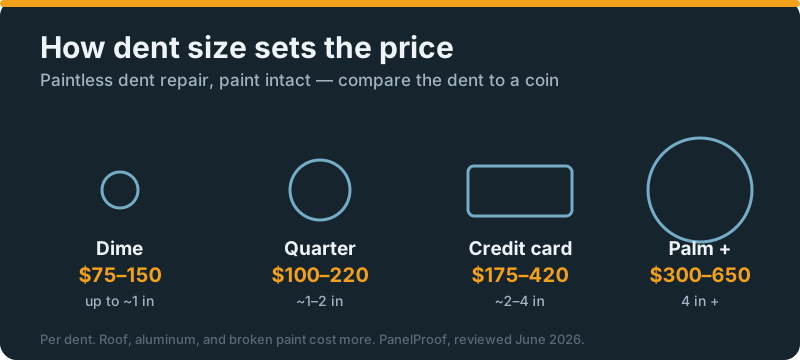
Here’s the size-tiered breakdown that most mobile PDR techs work from:
- Dime-size, flat panel: $50 to $90
- Quarter-size, round: $75 to $150
- On a body line or character line: $125 to $250
- Sharp crease: $200 to $400
- Multiple dings (2–4) on one door: $150 to $300 total, priced as a package
That’s a national-ish spread, and it moves with your zip code. Dentevo, a California-based PDR shop, quotes $195 to $295 for a single small door ding, well above the $75 to $150 you’ll see quoted by shops in lower-cost markets. Get two or three quotes if the number you’re hearing sounds high. PDR pricing is genuinely local, and a five-minute phone call can save you $100.
Why a body-line ding costs more than a flat one
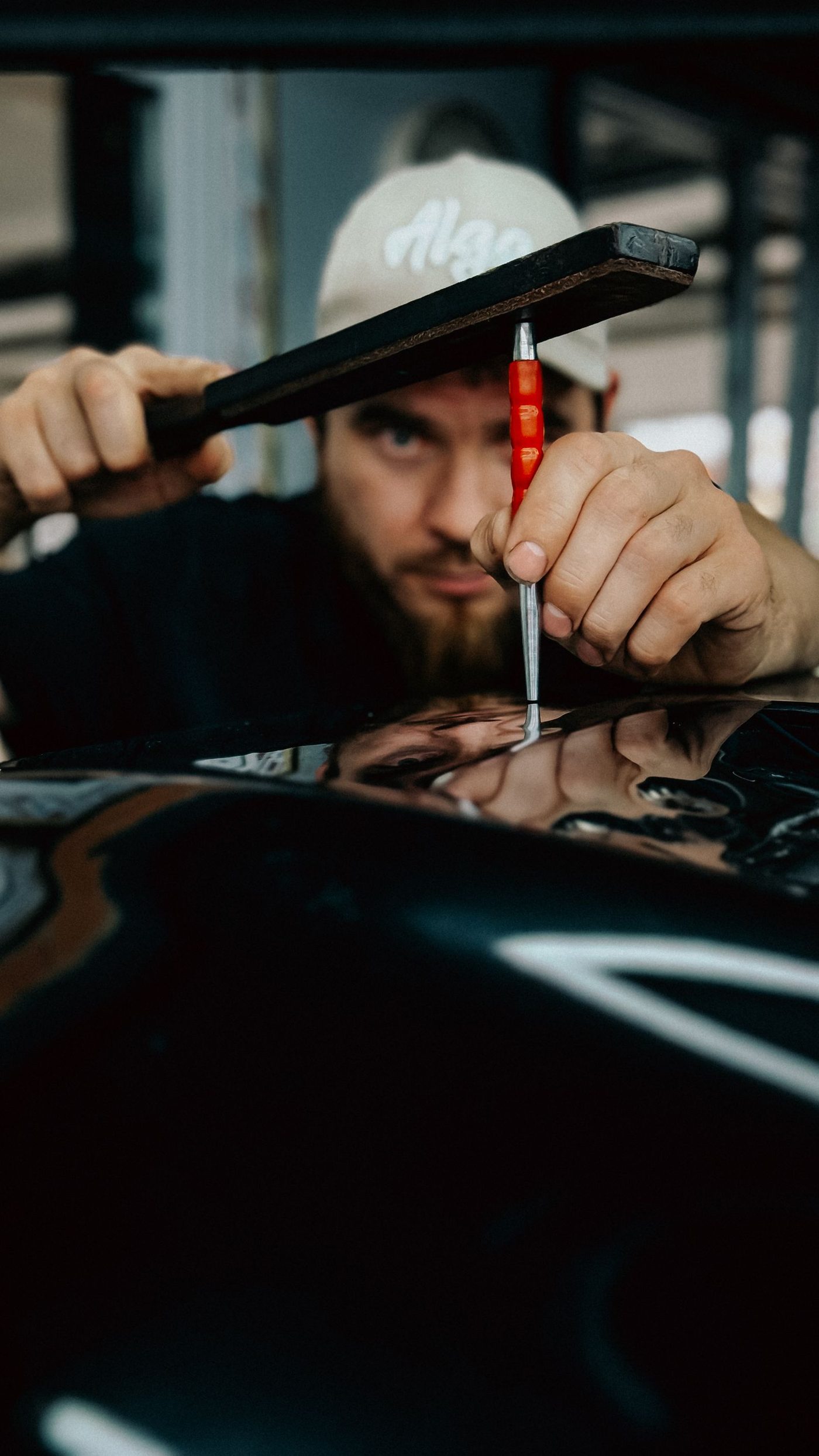
A ding sitting in the flat middle of a door is the easiest job in paintless dent repair. The tech works the metal from behind with a rod, pushing and tapping until it’s flush, and the surrounding panel has nothing to fight against.
A ding on a character line, that crease running along most modern doors, is different. The tech has to restore a crisp edge, not just a smooth curve, working millimeter by millimeter so the line doesn’t wobble. That’s why the same size ding costs roughly double on a body line versus a flat panel. It’s not really about the dent. It’s about the line running through it.
The paint test still decides everything
Same rule as every dent guide on this site: run a fingernail over the ding. Smooth means PDR, and you’re in the numbers above. A crack, a chip, or bare metal means the panel needs filler, primer, and a blended repaint, and that’s a different job at a different shop. The paintless dent repair cost guide covers that split in more depth if you want the full picture across panel types.
Where door dings actually come from
Shopping carts are the classic culprit, and there’s a reason. A loaded cart at hip height hits right where most doors have a flat, unbraced section, and it rolls at just enough speed to dent without denting the person pushing it. Parking next to a cart corral instead of directly in front of it is a genuinely free way to cut your odds.

The other repeat offender is a neighboring car door opened too fast in a tight parking lot. Both causes leave the same signature: a shallow, rounded dish with the paint intact, which is exactly the profile PDR was built to fix.
DIY or call a tech?
A glue-pull kit runs $20 to $100 and genuinely works on a shallow, rounded ding with intact paint on a flat panel. Warm the panel a bit first (park in the sun for twenty minutes), glue a tab to the low point, and pull straight out with the slide hammer, a little at a time. Overpull and you’ll get a high spot that’s harder to fix than the original ding.
Skip DIY entirely if the ding sits on a body line, has any crease, or shows the faintest crack in the paint. A pro PDR tech trained on exactly this work will get it flush and invisible in about the time it’d take you to watch a movie trying to figure out the glue-pull kit.
When it stops being a door ding
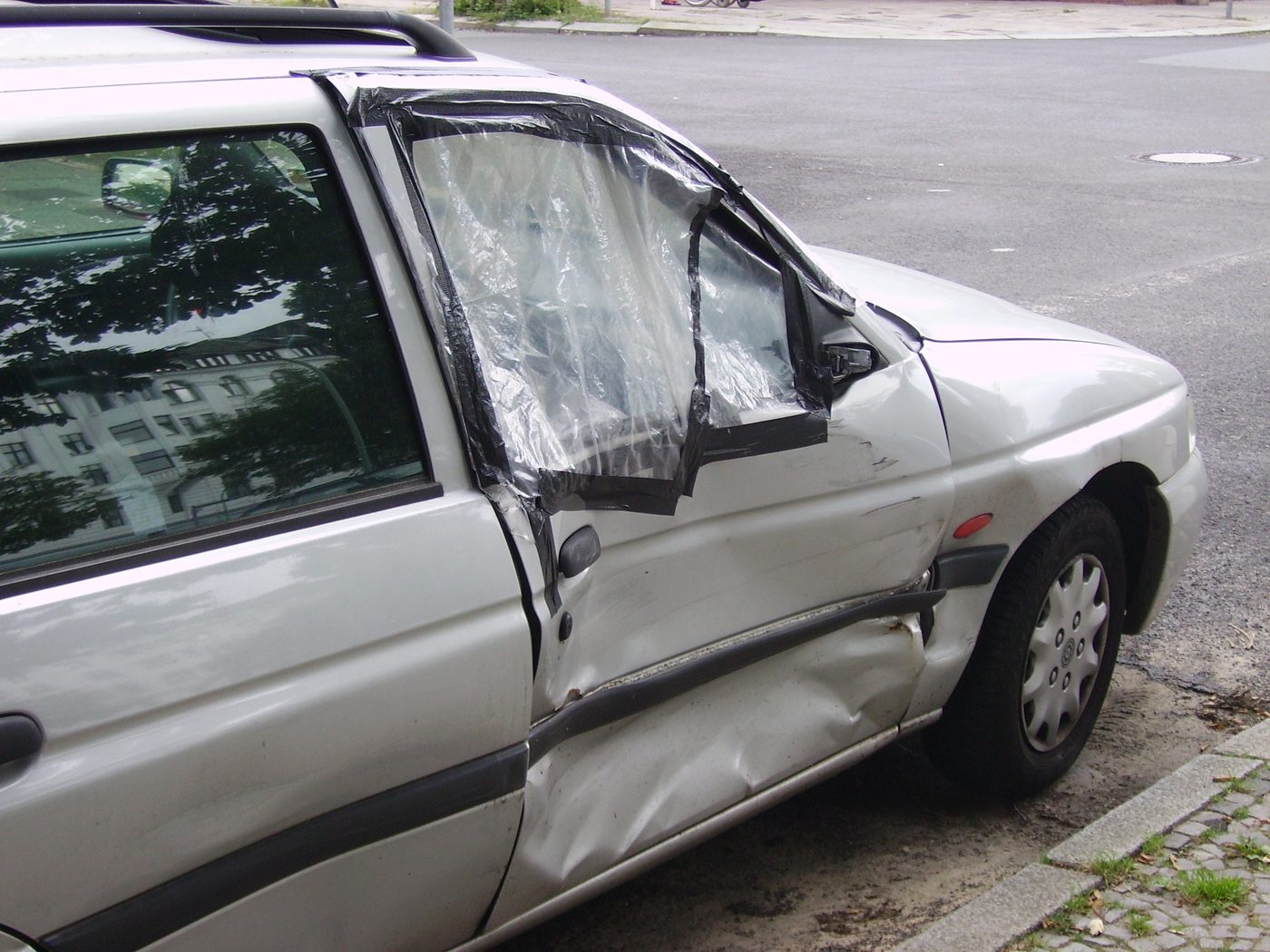
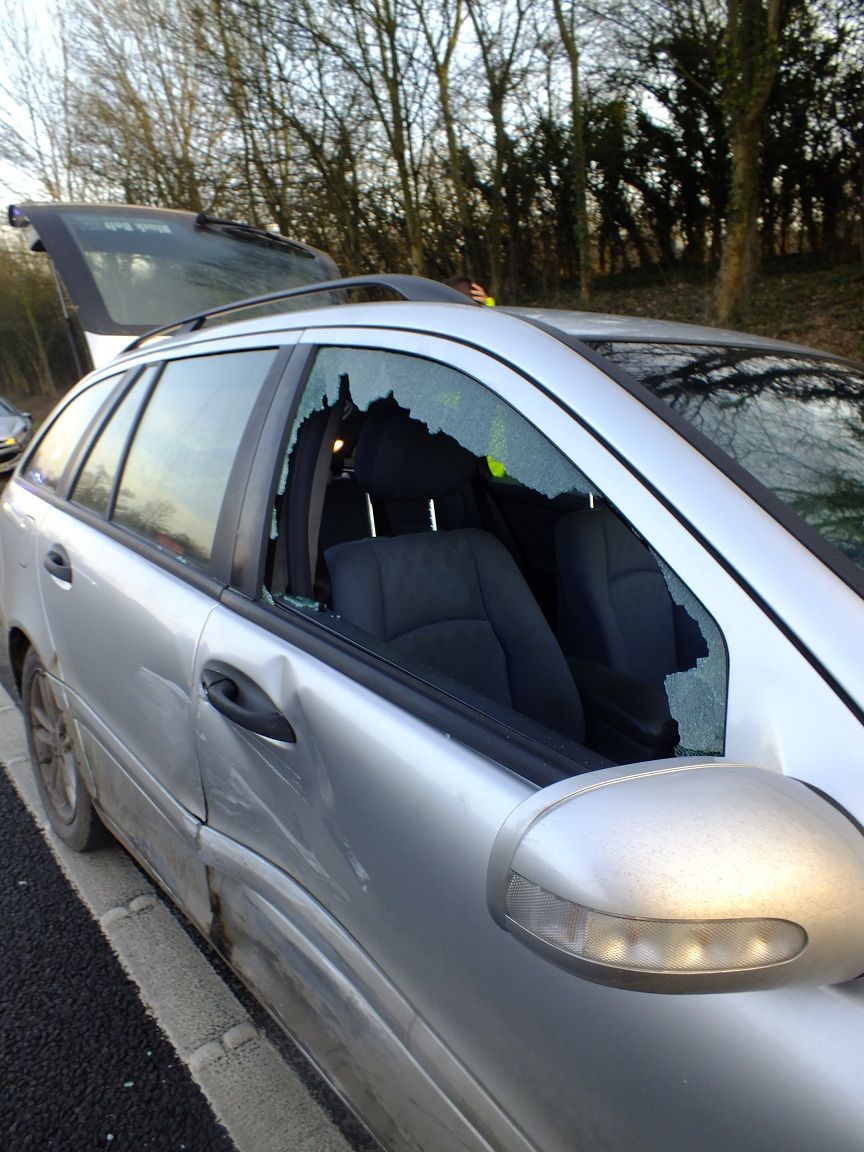
Not every door hit stays a ding. A hard enough impact creases the metal, cracks the paint, and sometimes takes out the window with it. That’s a body-shop estimate, not a PDR quote, and it’s a good reminder of why the paint test at the top of this guide matters: it’s the line between a $125 fix and a four-figure one.
If your dent is really a bumper or a larger panel dent rather than a small door ding, the car dent repair cost guide covers that wider range, including what happens once bodywork and a repaint are on the table.
Knowing a coin-size door ding should land between $75 and $200 in most markets, before you ever call a shop, is the difference between paying a fair price and getting quoted for a full panel respray you don’t need.
What changes the price
| What changes the price | Effect on cost |
|---|---|
| Ding size | A dime-size ding on a flat panel runs $50–90; a quarter-size ding is $75–150. Sizing it against a coin gets you most of the way to a fair number. |
| Location on the door | A ding on a body line or character line costs $125–250, roughly double a flat-panel ding of the same size, because the tech has to match a crisp edge instead of a smooth curve. |
| Crease vs. dish | A rounded dish pulls out clean. A sharp crease can run $200–400 and sometimes leaves a faint shadow even after a good repair. |
| Paint condition | Cracked or chipped paint takes the ding out of PDR pricing entirely. Body shop work for the same spot starts around $300 and climbs from there. |
| Panel material | Aluminum doors, common on newer trucks and EVs, add 30–50% because the metal work-hardens differently than steel. |
| Number of dings | Two to four dings on one door often price as a $150–300 package rather than each ding billed separately. |
DIY or hire a pro?
Do it yourself
$20–$100
A shallow, rounded ding on a flat part of the door, with the paint fully intact, is the one job a glue-pull kit actually handles well. A ding on the character line, a crease, or anything with chipped paint is where kits make it worse, not better.
What you'd buy on Amazon:
Hire a pro
$50–$500
A mobile PDR tech is the right call for almost every door ding, because it keeps the factory paint and takes an hour, not a day. Once the paint has cracked, you're booking a body shop instead.
As an Amazon Associate, PanelProof earns from qualifying purchases.
Is it worth fixing?
Fix it if…
the ding sits on a body line, you've got two or three on the same door, or you're heading into a lease return or a sale where every ding gets itemized against you.
Live with it if…
it's one shallow, paint-intact dish in the flat middle of the panel on a car you're keeping. It won't spread or get worse sitting there.