Clear Coat Scratch Repair Cost (2026): Buff or Respray
Clear coat scratch repair costs $15 to $600 in 2026. Learn the fingernail test, what buffing and wet sanding actually cost, and when you need a spot respray instead.
Typical cost
$15$600
Costs reviewed July 2026
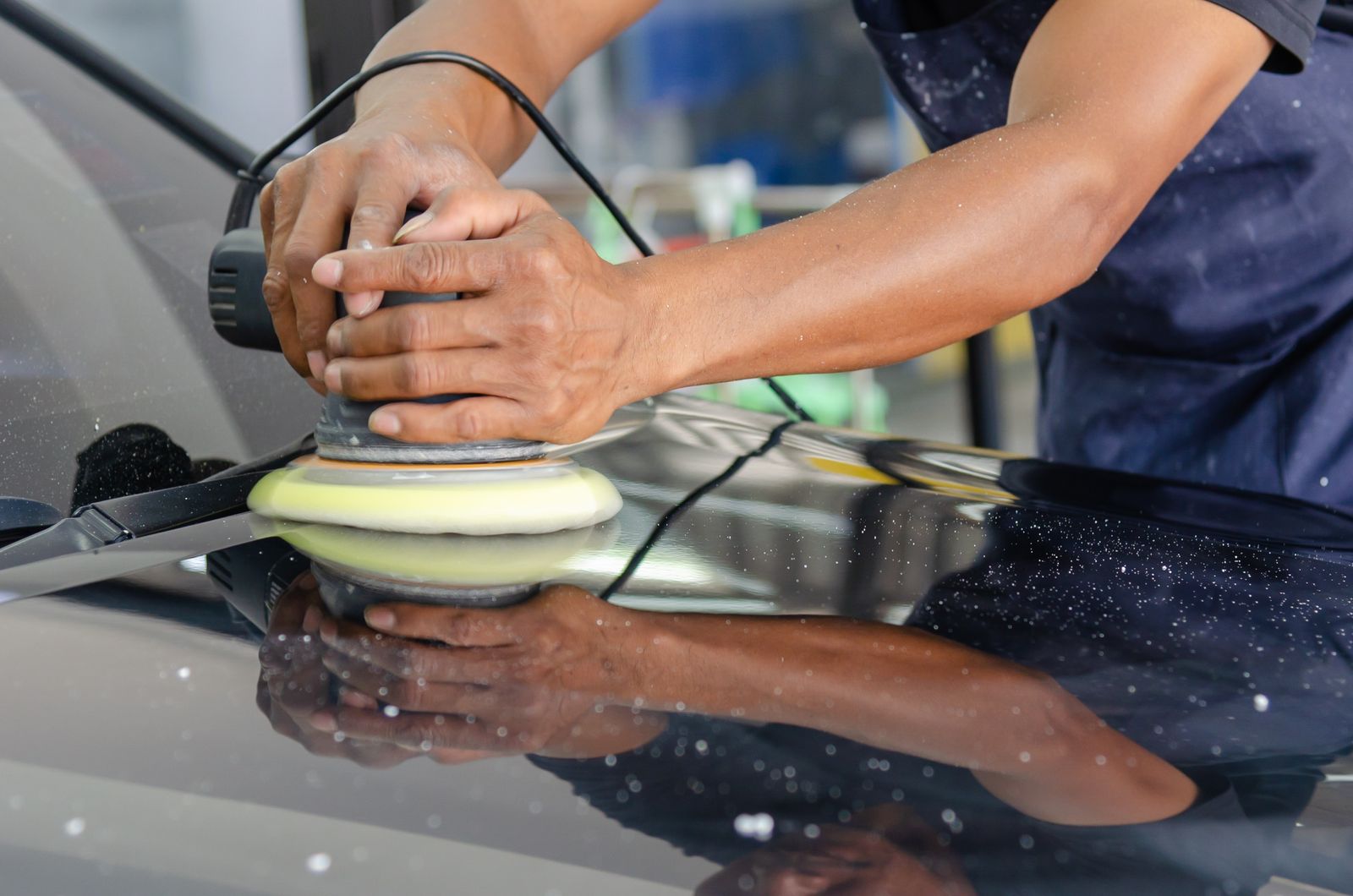
Clear coat scratch repair runs $15 to $600, and almost everyone lands at the cheap end. If the scratch never made it past the clear layer, it is a buffing job, not a paint job, and buffing is the one car repair where a $15 kit can genuinely match what a shop does.
Most people with a real, visible clear coat scratch pay around $150 for a single-panel shop buff. Here is how to tell where you sit before anyone quotes you.
The fingernail test, refined for clear coat
Drag a fingernail gently across the mark. If it glides over smoothly, you are in clear coat territory, and the question becomes how many passes it needs, not whether paint is involved.
- Nail glides, mark is barely visible in shade: a light haze or swirl. A $15 kit or a $100 shop buff removes it in one pass.
- Nail glides, but the mark catches light at an angle: moderate clear coat scratch. Wet sanding first, then buffing. $30 to $50 DIY, or $150 to $300 at a shop.
- Nail catches just slightly, no white or color showing: a deep clear coat scratch. Multiple wet-sand passes and a slower buff. $250 to $450 at a shop, and DIY results get noticeably harder to match professionally past this point.
- Nail catches and you see white or color: you are past clear coat. That is a different repair, covered in the general scratch repair guide.
What each method actually costs
Buffing and wet sanding are not paint work, which is why they stay so much cheaper than anything past clear coat.
- Machine buffing, single panel: $100 to $300
- Wet sanding add-on, before buffing: $50 to $200 on top of the buff
- Deep clear coat scratch, multiple passes: $250 to $450
- Spot clear coat respray (buffing alone will not fix it): $200 to $600 per panel
- DIY kit: $15 to $60 depending on whether wet sanding pads are included
A full vehicle paint correction, polishing every panel rather than one scratch, runs $500 to $1,500 and up. That is a detailing choice, not a repair, so it is not part of this number.
DIY that actually works here
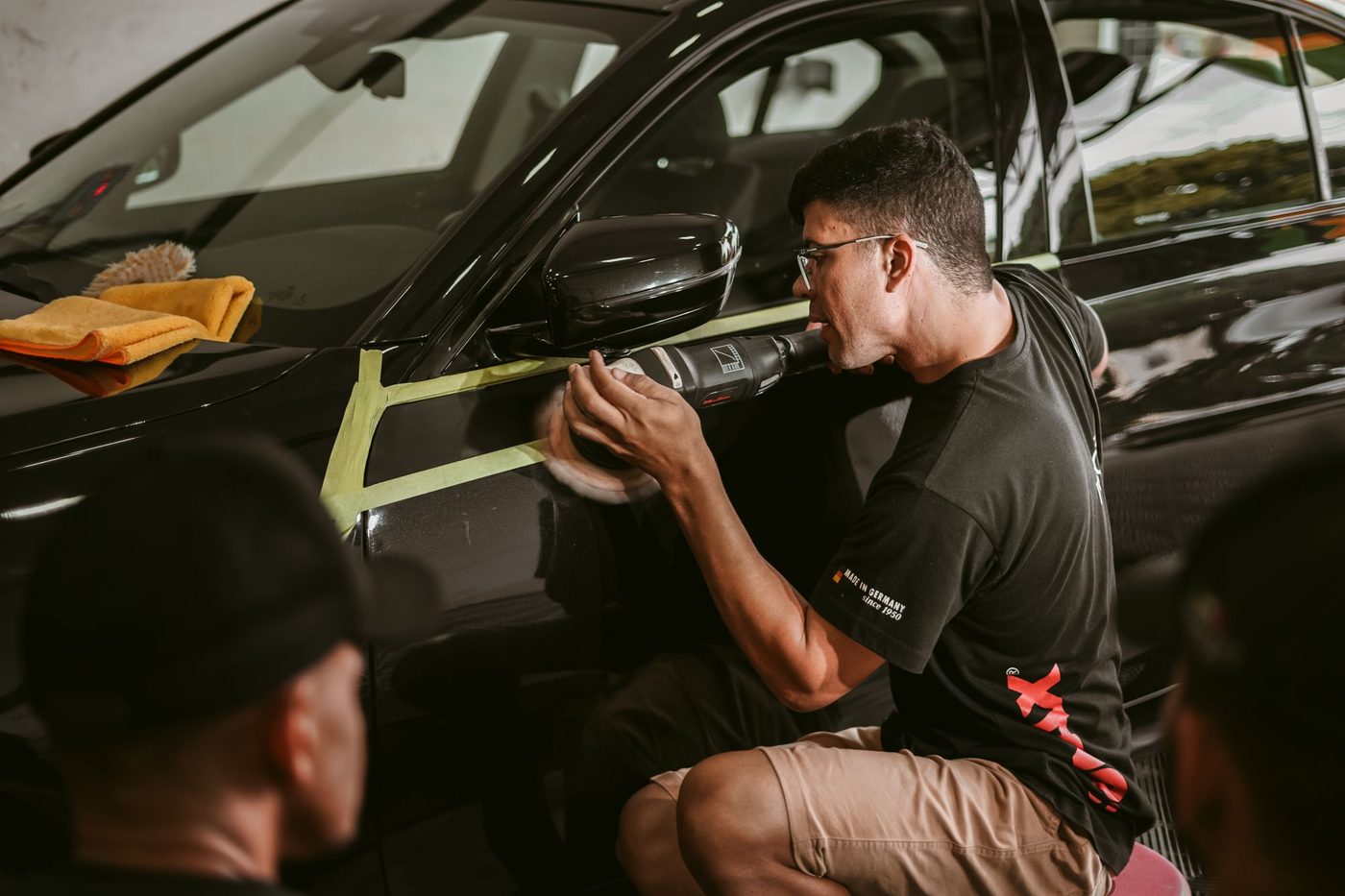
Start with the cheapest tool that could plausibly work. A scratch-remover kit with a foam applicator handles a light haze in ten or fifteen minutes of actual work. If the fingernail test says moderate, add a wet-sanding step: work through 3000 grit, then a finer polish, checking your progress under direct light every few passes so you do not sand through the clear layer. That last part is the real skill involved, and it is also why a deep clear coat scratch is where most DIYers hand it to a shop instead. Once the compound is done, seal the spot. Buffing thins the clear coat, and a fresh coat of wax or sealant is what keeps that thinner spot from being the next thing that fails.
How much clear coat you actually have to work with
Buffing works because clear coat has some thickness to spare, but not unlimited thickness. Factory clear coat typically runs around 1.5 to 2 mils on its own, with the full paint stack, primer, base color, and clear together, landing somewhere around 4 to 5 mils on a typical factory finish. Most manufacturers’ own guidance caps safe removal at roughly 0.3 mils, about 8 microns, per correction session, because clear coat isn’t just gloss, it’s the UV shield for the color coat underneath. Thin it too far and sun exposure starts degrading and fading the paint below, even while the surface still looks glossy right after polishing. A light single-pass polish removes only about 2 to 5 microns, well inside that budget. A more aggressive multi-pass correction, the kind a deep clear coat scratch needs, can remove 10 to 20 microns or more in one visit, which eats into the safety margin fast, especially on a panel that’s already been buffed once or twice in the past.
This is also why a shop dealing with a deep scratch, or any panel with an uncertain repair history, will sometimes measure with a paint thickness gauge before committing to a wet-sand-and-buff plan rather than eyeballing it. A reading much under about 3.5 mils total is the signal to stop compounding and consider a spot respray instead: there isn’t enough clear coat left to safely take more off.
When buffing stops being the answer
Two situations push you out of buff-and-done territory. First, if the clear coat around the scratch already looks uneven, cloudy, or is starting to peel at an edge, another round of buffing risks burning through to the color coat. A spot respray of just the clear layer, no color needed, is the safer and often cheaper fix at that point. Second, a scratch that crosses a body line or wraps a curved panel is harder to blend evenly by hand; a shop’s dual-action polisher does that consistently in a way a hand pad struggles to match.
Does it turn into rust if you ignore it?
Not if it genuinely stayed in the clear coat. Rust needs bare metal exposed, and a true clear-coat-only scratch never gets there. The risk is misjudging the fingernail test, treating a scratch that actually caught primer or metal as cosmetic, and leaving it. When in doubt, seal it with touch-up paint rather than skip it. A $10 pen is cheap insurance against a $1,500 rust repair down the line.
Run your scratch through the fingernail test before anyone quotes you a number. Most clear coat scratches are a $100 to $150 problem wearing the reputation of an $800 one.
What changes the price
| What changes the price | Effect on cost |
|---|---|
| Does it catch a fingernail | The line between a $20 kit and a shop visit. If a nail glides over it, you are almost always looking at buffing, not paint. |
| How many passes it needs | A light haze buffs out in one pass. A deeper clear coat scratch needs wet sanding first, which adds labor even though no paint goes on. |
| Whether the clear coat is uneven or peeling at the edges | Buffing thins the clear coat every time. If a previous scratch or a botched DIY attempt already thinned it unevenly, a spot respray is often cheaper than risking burn-through. |
| Panel size and paint type | A door-length scratch takes longer to blend evenly than a two-inch mark. Metallic and pearl finishes show buffing inconsistency more than a solid color does. |
| Shop vs mobile detailer vs DIY | Mobile detailers often undercut body shop rates for buffing-only work, since there is no paint booth involved. |
DIY or hire a pro?
Do it yourself
$15–$60
This is one of the few car repairs where DIY genuinely matches shop results, because a scratch that stays inside the clear coat has nothing left to hide. A $15 kit handles a light scuff; a deeper one wants wet sanding pads first, which pushes the kit cost closer to $60. Go past clear coat into color and DIY stops being invisible.
What you'd buy on Amazon:
- Clear coat scratch and swirl remover kit, compound plus applicator pads for light to moderate scratchesAmazon
- Wet sanding pads, 3000 to 5000 grit, for a scratch deep enough to catch a fingernail slightlyAmazon
- Rubbing compound and microfiber towels, finishing pass after wet sanding, by hand or with a drill attachmentAmazon
Hire a pro
$100–$600
A shop buff on a single panel runs $100 to $300 for most clear coat scratches. One that needs wet sanding first, or a deep mark a straight buff will not fully lift, lands at $250 to $450. If the clear coat itself is compromised, peeling, uneven, or too thin to safely buff again, a spot respray of just the clear layer runs $200 to $600 per panel.
As an Amazon Associate, PanelProof earns from qualifying purchases.
Is it worth fixing?
Fix it if…
the scratch is visible from a normal walking distance, on a panel you see every day, or the clear coat looks uneven or milky around the mark. Clear coat protects the color and the metal underneath; a compromised patch is worth sealing before it gets worse.
Live with it if…
it is a faint scuff that mostly vanishes when the car is wet or in direct sun, especially on an older car you plan to sell soon. A $15 kit is still worth trying, but there is no urgency.
A clear coat scratch almost never clears a comprehensive deductible. Even the top of this range, a $600 spot respray, sits below a typical $500 to $1,000 deductible. Treat this as a cash repair and save the claim for something that actually costs more than your deductible.