Best Rust Converters: Chemistry, Prep, and Honest Limits
Tannic and phosphoric converters, encapsulators, and removers do four different jobs. Here's which chemistry suits which rust, and where a bottle stops being the answer.
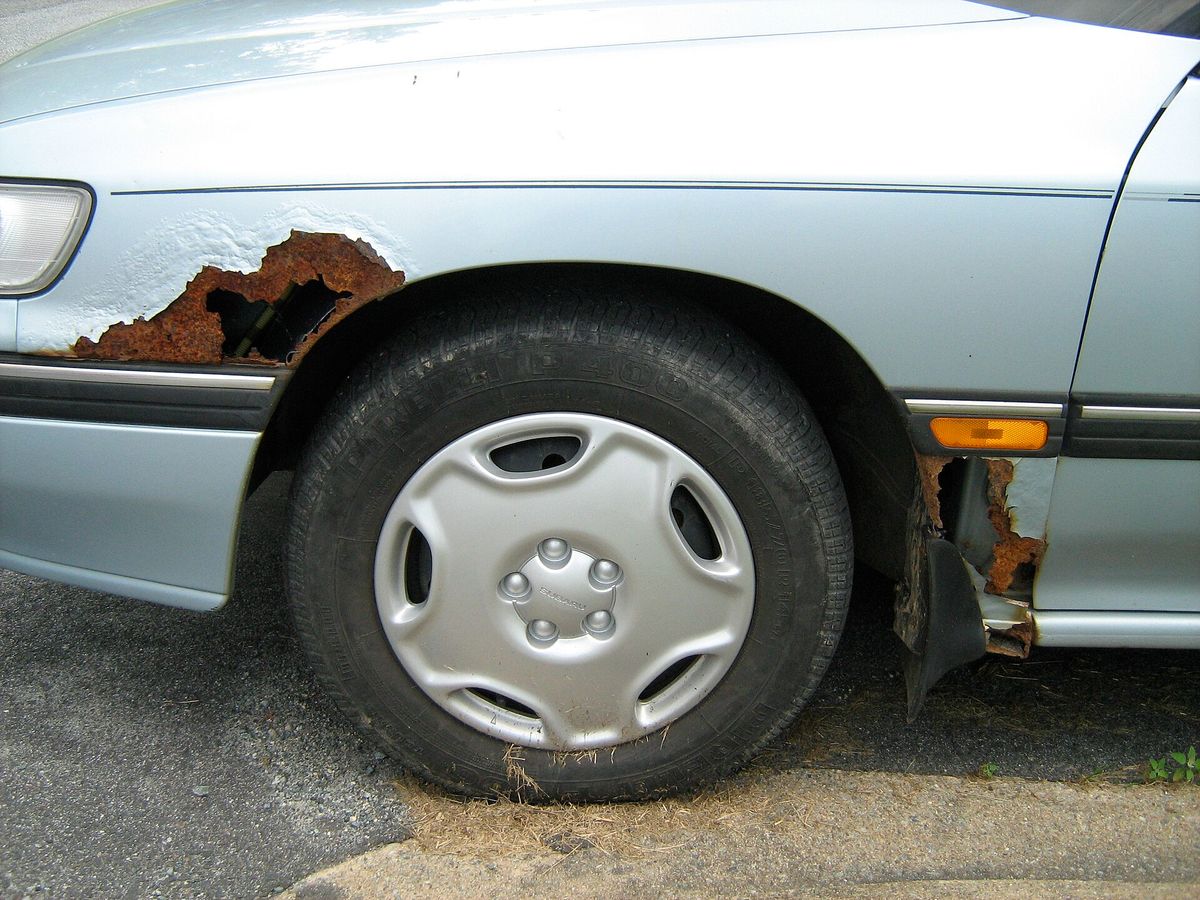
A rust converter does not remove rust. It reacts with the iron oxide already there and turns it into a different, more stable compound that will hold paint. That single sentence rules out about half the jobs people buy converters for, and it explains why the bottle in your hand has one of two very different acids in it.
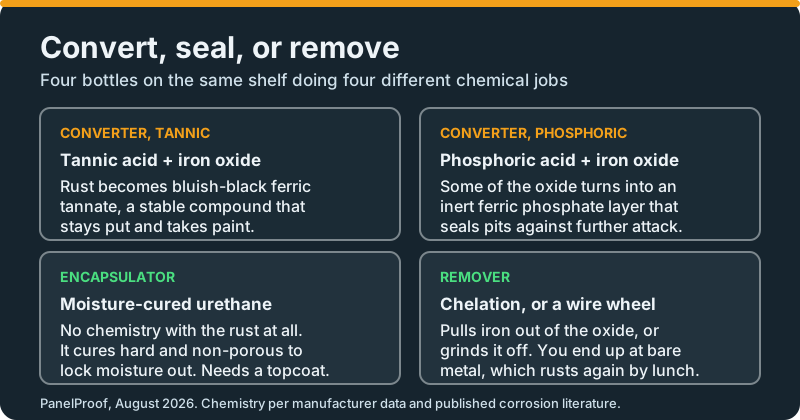
Here is the split. Tannic acid converts reddish iron oxides into bluish-black ferric tannate, a stable compound that stays on the metal. Phosphoric acid converts some of the oxide into an inert layer of ferric phosphate, which seals pitted surfaces against further attack. Most consumer products use one, the other, or both, alongside a polymer that leaves a paintable film behind.
As an Amazon Associate, PanelProof earns from qualifying purchases.
Converters: what to buy for surface rust on solid metal
Converters are for light to moderate surface rust on metal that is still structurally sound. Scale it back further than that and they are wasted; go past it and they are a fig leaf over a hole.
Corroseal is the one to reach for when you want conversion and primer in one pass. Its maker describes it as a water-based acrylic latex primer that turns iron oxide into magnetite, a black and inert substance, and it brushes, rolls, or sprays and cleans up with soap and water. That last part matters more than it sounds. A water-based converter on a frame rail means you are not handling solvent under a car in a closed garage.
- Corroseal water-based rust converter and metal primer, 1 quart is the pick for underbody, frame, and floor pan work where you want a primed surface at the end of one step. Check current price.
- FDC Rust Converter Ultra, 1 gallon is the volume option for a whole underbody, a trailer, or a set of panels, and gallon pricing is a fraction of quart pricing per square foot. Check current price.
For small, awkward spots, an aerosol beats a brush by enough to justify keeping a can on the shelf. Rust-Oleum sells Rust Reformer as a spray that converts rust to a protected, paintable surface with no bare metal sanding required, in a 10.25 ounce can. Bought in six-packs it works out to roughly $10 to $12 a can (checked August 2026), which makes it cheap enough to keep around for spring inspections.
- Rust-Oleum Stops Rust Reformer spray, 10.25 oz covers seams, brackets, and the inside faces of things you cannot get a brush into. Check current price.
Encapsulators are a different product doing a different job
POR-15 gets shelved next to the converters and it is not one. It is a single-component moisture-cured urethane, which means it cures harder and faster when humidity is present, the reverse of ordinary paint. It does no chemistry with the rust at all. It seals over prepared metal with a non-porous film so that oxygen and water cannot reach what is underneath.
That distinction drives its prep requirements, which are genuinely demanding and the reason most disappointing POR-15 jobs go wrong. The manufacturer’s sequence is remove loose rust and built-up dirt, wash with its Cleaner Degreaser kept wet for 10 to 15 minutes, then apply Metal Prep and keep that wet for 15 to 25 minutes on normal rust, 25 to 45 on heavy rust, then dry completely. Smooth or new metal gets roughened with 100 to 180 grit first, because the coating needs a mechanical key. Two thin coats, with the second going on while the first is dry but still slightly tacky, and nothing applied above 75 percent humidity.
One more thing that surprises people: POR-15 is not UV stable. Any part of it in direct sunlight needs an opaque UV-safe topcoat over it, which is why it lives on frames and floor pans rather than on visible bodywork.
- POR-15 Rust Preventive Coating, 32 oz gloss black is the standard choice for frames, floor pans, and inner structure where you want a hard, sealed barrier and you are willing to do the prep it demands. Check current price.
When you want the rust gone rather than converted
For a part you can take off the car and drop in a bucket, removal beats conversion outright. Evapo-Rust uses selective chelation, where a large synthetic molecule bonds to iron and holds it in solution, pulling iron out of the oxide while being too weak to attack the iron locked in the steel itself. It is pH neutral, so it does not etch good metal the way an acid dip does.
The numbers are specific and worth planning around. Light rust clears in about 30 minutes; heavy rust wants an overnight soak. A gallon will remove roughly half a pound of dry rust, and the solution stays usable until its specific gravity hits 1.08, at which point it is spent.
- Evapo-Rust rust remover, 1 gallon is for brackets, hardware, tools, and anything else that unbolts. Check current price.
The catch with removal is what you are left with. Bare steel with no oxide layer at all starts flash rusting almost immediately in humid air, so a de-rusted part needs primer or oil the same day, not next weekend.
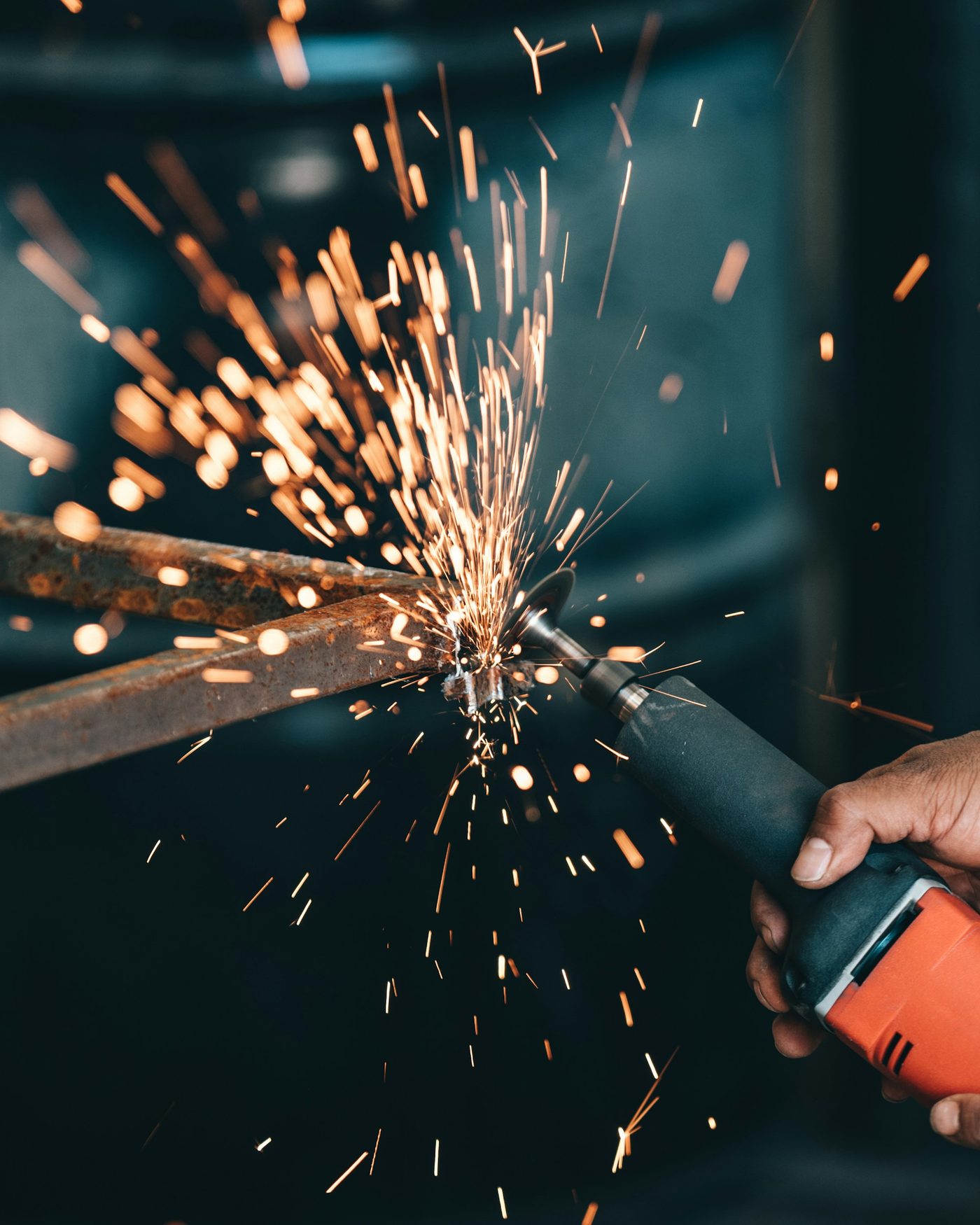
Mechanical removal has the same problem and a worse working environment. A wire wheel or a grinder takes rust down to bright metal fast, and it also throws it into the air.
- If you are going that route, a wire wheel and cup brush set for a drill or angle grinder is the cheap starting point. Check current price, and wear a face shield rather than glasses, because wire wheels shed wires at speed.
Does any of this actually work? The honest answer
Converters are sold with a lot of confidence, so it is worth reporting what the corrosion literature found when someone tested them properly.
A 2004 study in Corrosion Science ran a phosphoric and tannic acid converter over steel corroded to grades C and D in sulfate and chloride environments. Spectroscopy confirmed the chemistry did what it claims: the iron oxyhydroxide phases decreased in favor of iron phosphates, and tannin compounds showed up in the rust layer. So conversion is real and measurable.
The performance result was less flattering. The authors found no significant difference between converted and unconverted painted samples, and in the case of high chloride contamination at grade D corrosion, the converter was actively harmful to how the paint performed.
Read that carefully rather than as a verdict. Grade D is heavy pitting corrosion, and high chloride contamination means salt still in the rust. What the study points at is the failure mode that matters in a driveway: a converter over salt-contaminated, deeply pitted rust does not save the job, and it may make the paint over it worse. Wash the salt out, work on light rust rather than heavy, and you are on much better ground than the tested samples were.
Where a bottle stops being the answer
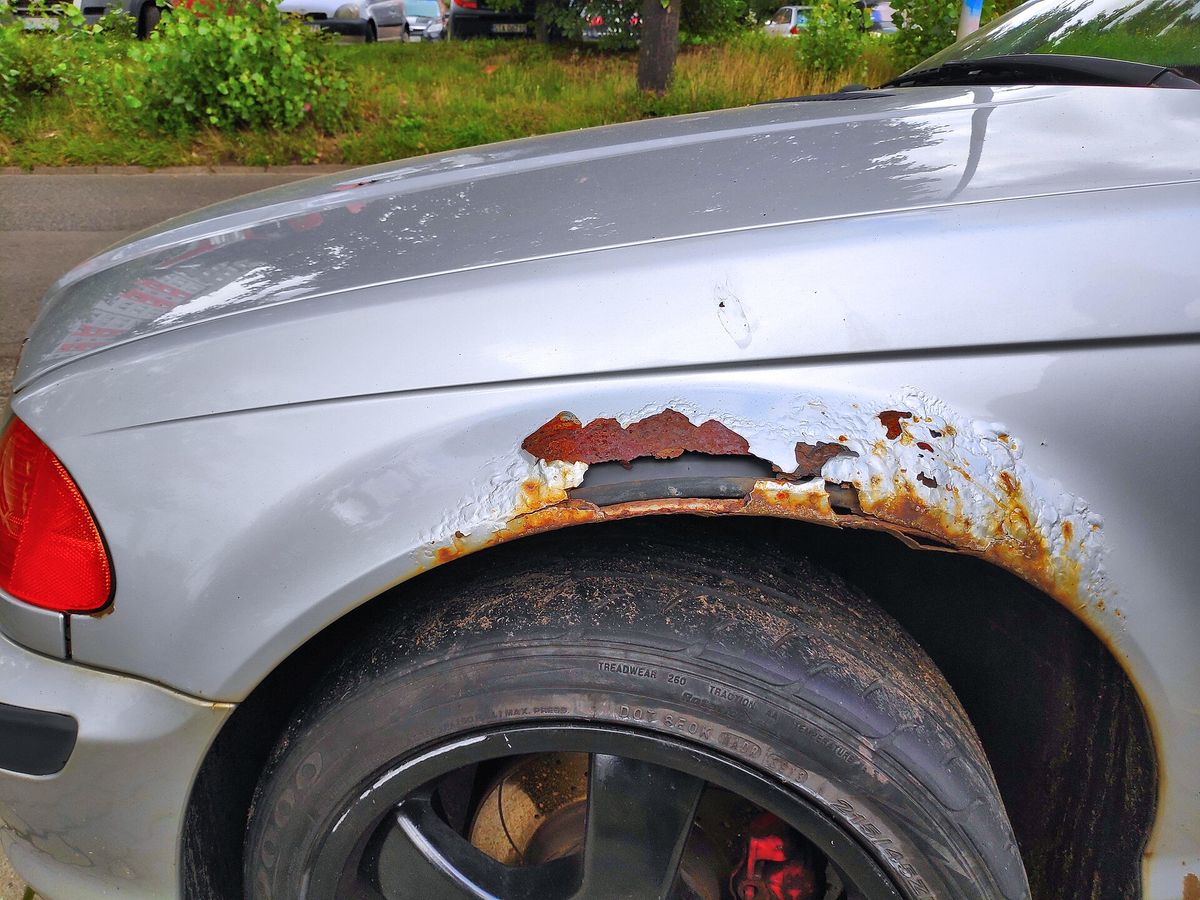
Rust is one of the few kinds of car damage that keeps working while you decide. The stages, and the honest cost of each, are laid out in the rust repair cost guide, but the short version is that surface rust runs $50 to $300 to treat, bubbling and scale runs $300 to $800 a panel, and penetrating rust that has eaten through the metal runs $800 to $2,500 and up because it needs cut-out and welded patch panels.
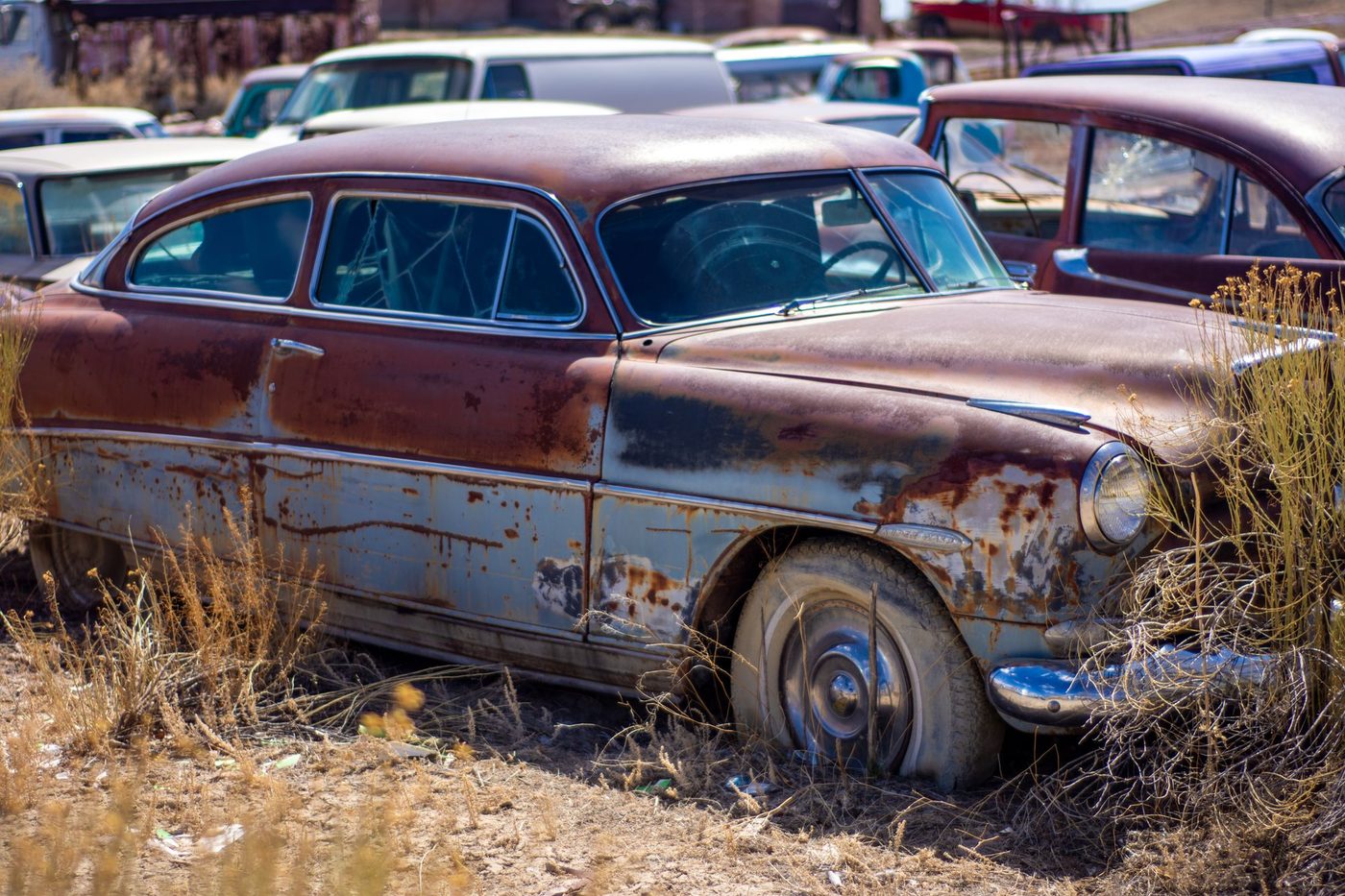
No converter crosses that last line. If you can push a screwdriver through it, if a panel flexes where it should not, or if you can see daylight, you are past chemistry and into fabrication. That is welding work, and on a unibody car it is safety work rather than cosmetic work.
Two places on a car deserve extra suspicion, because both look cosmetic and are not. Rocker panels carry side-impact crash energy on a unibody, so rot there is a structural finding that also fails state inspection in some states. And frame rust is the point at which the sensible conversation shifts from repairing the car to valuing it.
What to do this weekend
If your rust is orange, flat, and on solid metal, buy a converter, get the surface genuinely clean first, and give it the full cure time the label asks for before you paint. If the part unbolts, remove the rust instead of converting it. If you are treating a frame or a floor pan and you want it to still look treated in five years, do the full POR-15 prep rather than the abbreviated version.
And if the metal is already thin, spend the money on stopping the next round instead. A treated underbody plus undercoating costs a fraction of what patch panels cost, and it is the one intervention that changes the trajectory rather than the appearance.