Best Dent Removal Kits: What Each Type Actually Fixes
Glue pullers, PDR rods, and suction cups fix different dents and fail in different ways. Here's which kit matches your dent, and the point where you stop and call a tech.
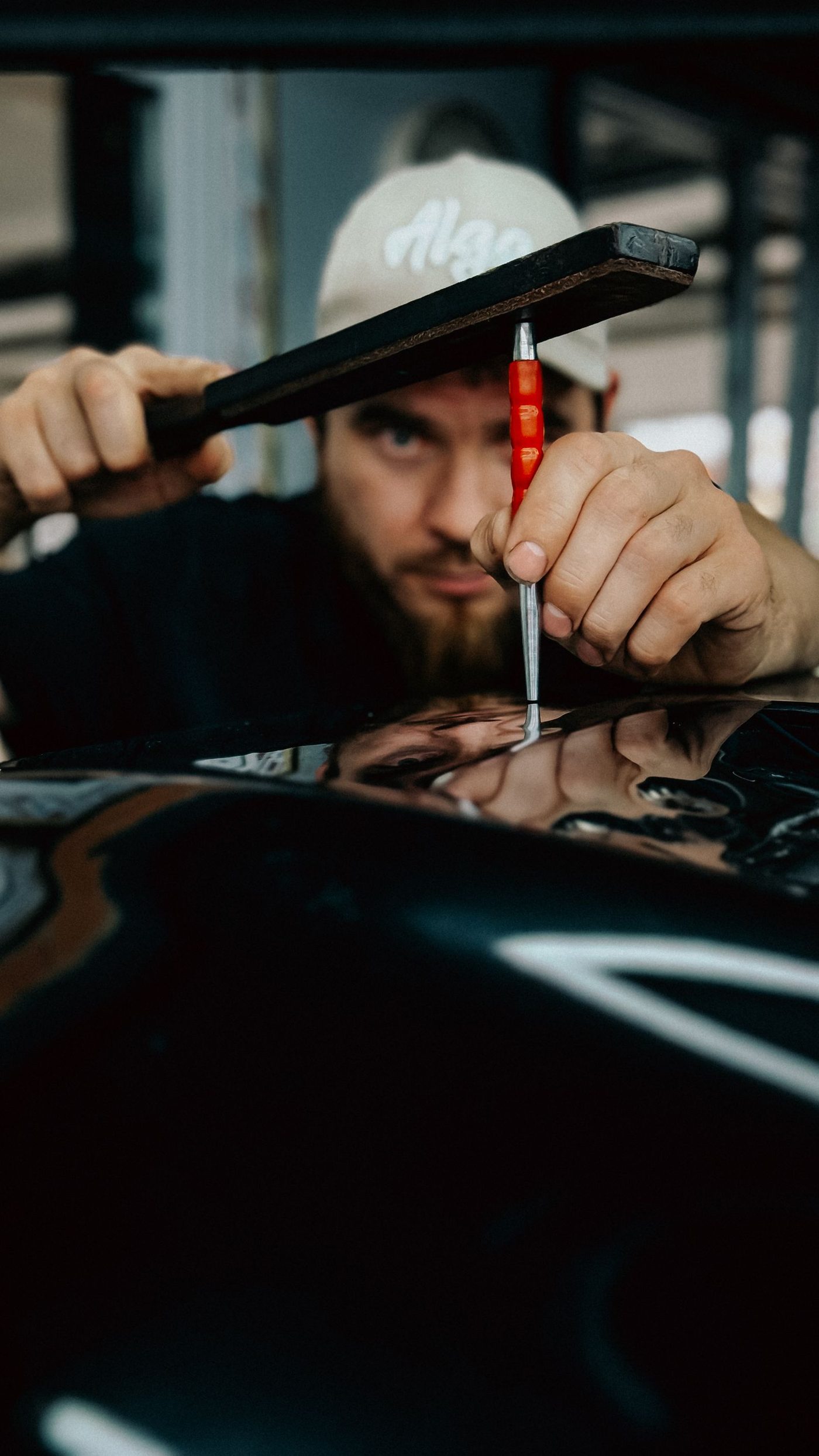
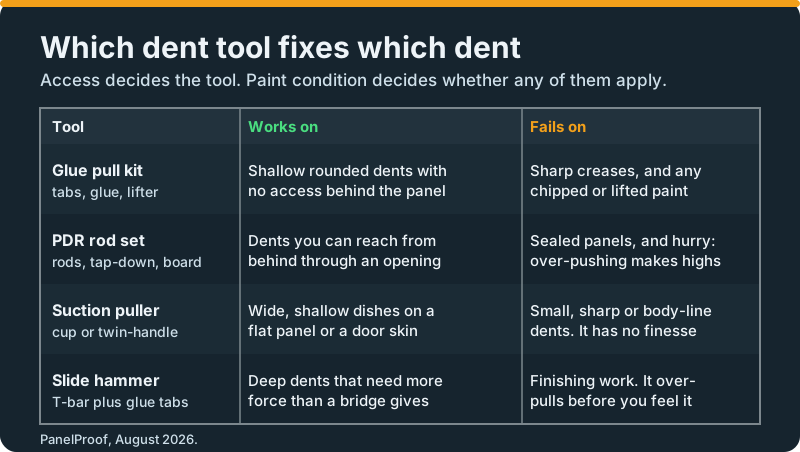
A dent kit is not one product. It is four different mechanisms sold under the same search term, and picking the wrong one is how a $150 door ding turns into a repaint. The short version: if you can get behind the panel, rods are the better tool. If you cannot, glue pulling is the only DIY route. And if a fingernail catches on broken paint anywhere in the dent, none of them apply.
Start with that last test, because it costs nothing and it settles most of the decision. Run a nail across the damage. Smooth, unbroken paint means the metal can move and the finish can move with it. A crack, a chip, or bare metal means the panel needs filler and paint, and the whole paintless approach is off the table.
As an Amazon Associate, PanelProof earns from qualifying purchases.
Glue pull kits: the one that works on sealed panels
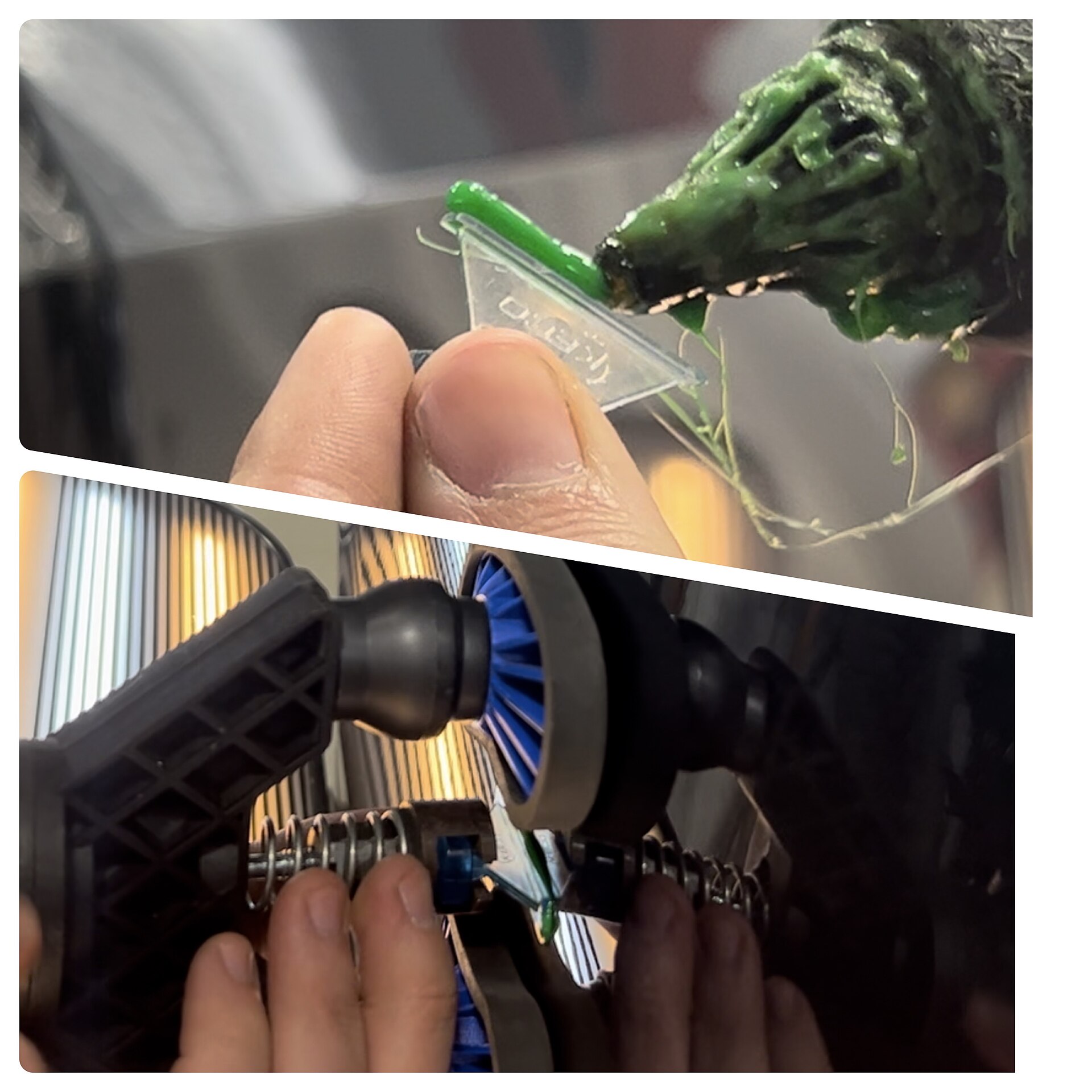
Glue pulling is the honest answer for most home repairs, because most home repairs happen on panels you cannot open up. A quarter panel, a roof, a door skin with the trim still in it. You warm a plastic tab with hot glue, stick it to the low point, and draw the metal back out with a bridge or a lifter.
The mechanism has one built-in weakness worth knowing before you buy. A glue tab pulls the center of the dent hardest, so a heavy pull lifts the middle and leaves a ring of high metal around it. That is why every serious kit ships tabs in five or six sizes: you match the tab to the dent’s footprint rather than yanking a big one at a small ding. Two moderate pulls with the right tab beat one hard pull with the wrong one, every time.
The other thing that separates a usable kit from a box of parts is the reflector. Human eyes cannot read a shallow dent on a curved painted panel under ordinary light. A striped line board turns the dent into a visible bend in a straight line, and without one you will chase a dent you cannot actually see.
- Manelord auto body repair kit with a double pole bridge covers the basic mechanism: a bridge puller, glue tabs, and a glue shovel for popping the tabs off afterward. This is the cheap way to find out whether you have the patience for it. Check current price.
- FLY5D kit with an LED line board and a heat gun adds the two things that make the difference: the board so you can see the dent’s edges, and a heat gun that both warms the panel and softens glue for removal. Check current price.
Glue is also unforgiving about paint. On a panel where the clear coat is already lifted at an edge, the adhesive takes the loose paint with the tab. Modern clear coats stretch somewhere in the range of 20 to 30 percent before they start to micro-fracture, according to the technical breakdown at DentAdvisor, and a dent that has already used up that budget will not survive a pull.
PDR rods: better results, much longer learning curve
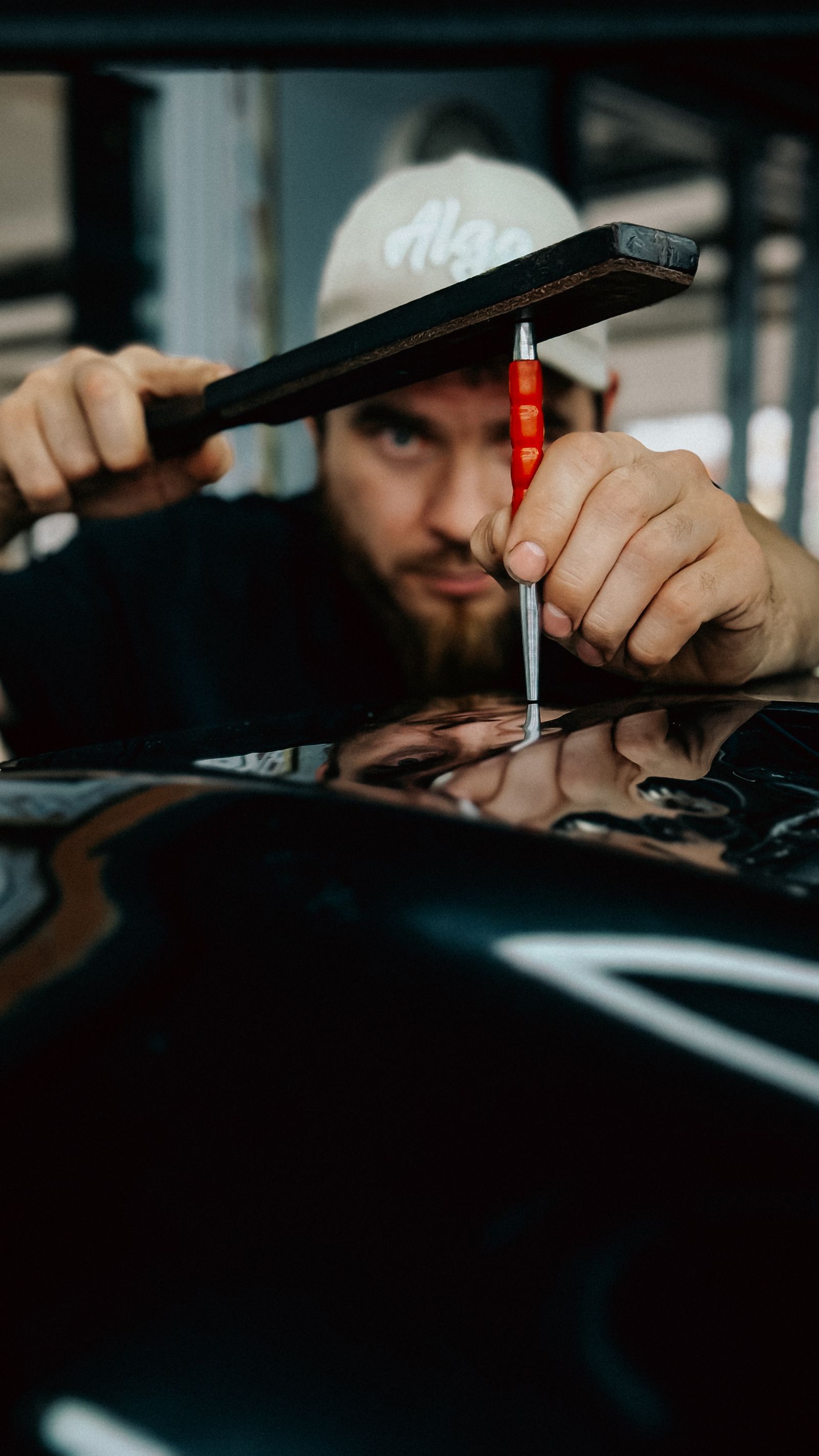
If the dent sits somewhere you can reach from behind, through a door frame, a trunk opening, a wheel well with the liner dropped, rods are the tool professionals reach for first. Pushing from behind puts the force exactly where you want it, in small increments, instead of pulling a whole area at once.
The catch is that rods are a skill, not a purchase. A rod set gives you the ability to raise metal one small push at a time and the ability to raise it too far, and the second one happens faster than the first. Nearly every beginner makes the same mistake: push until the dent looks gone, discover a cluster of high spots, then flatten those with a tap-down and end up with a wavy panel that reads worse than the original ding under a showroom light.
A tap-down hammer and knockdown set is not optional for this reason. It is the undo button.
- SOTRLO paintless dent repair rod kit with hammer and tap down is a reasonable entry point: rods for the push, a tap-down for the correction. Do your first attempt on a panel you can live with looking imperfect. Check current price.
Budget expectations matter here too. Entry-level rod sets sit in the low tens of dollars, while working professional sets run well into four figures, which tells you something honest about what the cheap set is for. It is for learning whether you enjoy this, and for rescuing one or two dings a year, not for matching a tech’s result.
Suction pullers and slide hammers: the blunt instruments
A suction cup puller has exactly one good use case: a wide, shallow dish on a flat panel, the sort of thing a knee or a shoulder leaves in a door skin. It applies broad, even force with no finesse at all. On anything small, sharp, or near a body line it does nothing, and owners consistently report the same result, which is that the cup lets go with a bang and the dent stays exactly where it was.
Slide hammers sit at the opposite extreme. Bolted to glue tabs, a slide hammer delivers a hard, sudden pull that will move metal a bridge cannot budge. It will also blow straight past flush and leave you with a bulge, which is a harder problem than a dent because there is nowhere for the extra metal to go.
- Manelord slide hammer and T-bar dent puller is the version of this most people buy, sold for hail and body dent work. Treat it as the tool of last resort inside a DIY job, not the first thing you reach for. Check current price.
- Suction cups are a commodity and rarely worth naming a brand: browse suction cup dent pullers and buy on cup diameter, since the small ones cannot hold enough vacuum to do anything at all.
Which dents are outside every kit in this article?
Four situations end the DIY conversation, and they are worth naming plainly because the kits themselves never do.
Broken paint. Already covered, and the most common one. Once the finish is cracked or chipped, the repair is filler, primer, and paint, which is conventional bodywork at $300 to $2,500 depending on the panel.
Sharp creases. A crease is not a deep dent, it is folded metal. DentAdvisor puts it bluntly: once a dent involves a sharp crease or fold, the lattice structure is fractured and full restoration is physically impossible without filler. No tab, rod, or hammer changes that.
Anything bigger than a hand. Dents past roughly six to eight inches across generally sit outside what paintless methods handle cleanly, whatever their depth. Push a large, stretched panel too hard and it starts oil canning, snapping between concave and convex under light pressure, which is a worse outcome than the dent you started with.
Dents within about an inch of a panel edge. The hem flange along a door or hood bottom is folded, bonded metal. Dents inside roughly one inch of that edge are generally disqualified even for professionals, because there is no clean way to work the metal without distorting the seam.
There is a fifth case that is not about difficulty at all: volume. A hood covered in hail dents is dozens of individual repairs, each one a chance to leave a high spot. Nobody gets that right on a weekend, and the cumulative mess costs more to undo than the original job would have cost to hand over.

Is a kit actually cheaper than a tech?
Sometimes, and less often than the kit’s packaging suggests. A mobile paintless tech charges roughly $75 to $220 for a typical door ding, and that price includes the one thing you cannot buy in a box, which is somebody who has already made the beginner mistakes on someone else’s car.
A kit makes clear economic sense in three situations. You have several small dings rather than one. You own an older vehicle where a good-but-not-perfect result is genuinely fine. Or you want the skill, and you are treating the first panel as tuition rather than as a repair.
It makes poor sense when the car is going up for sale, when the dent sits somewhere a buyer’s eye lands first, or when it is the only dent on an otherwise clean panel. In those cases the tech’s result is the product you are actually buying, and the full pricing breakdown by dent size will tell you within about fifty dollars what that should cost before you make the call.
Set the expectation honestly before you order anything. A careful amateur takes a shallow ding from obvious to barely visible in an afternoon. That is a real result and worth the money. It is just not the same result as invisible.